 En
En
 Français
 Español
 Italiano












Should you follow the keto diet? benefits, risks and expected results
Key takeaway: The keto diet, while effective, imposes strict carbohydrate and fat restriction, difficult to maintain. The Cétofine 21 method offers a structured alternative in 4 phases with protein intake and personalized support to avoid the yo-yo effect. 30,000 women testify to its simplicity and safety for permanent weight loss, without frustration or calculations.
Overweight after 50, dreaming of losing 5 to 15 kg without frustration or the yo-yo effect? The keto diet, known for its speed, requires a drastic reduction in carbohydrates (less than 50g/day) and large quantities of fat, often a source of fatigue or daily difficulties. We will also look at simpler alternatives such as the high-protein diet.
- The keto diet: the complete guide to understanding everything before you start
- What is the keto diet and how does it work?
- What foods are allowed and forbidden on the keto diet?
- The benefits and risks of the ketogenic diet
- Keto diet vs. high-protein diet: which is the best approach for you?
- A 4-step method for permanent weight loss
- FAQ – frequently asked questions about the keto diet
The keto diet: the complete guide to understanding everything before you start
You have probably heard of the famous keto diet and you are wondering if it could be the miracle solution to lose those few kilos that weigh on you, especially after 50?
The ketogenic diet is a very low-carb, high healthy fat and moderate protein diet. Its goal is to put the body into ketosis so that it uses fat as its main fuel. It's a method that is talked about for its promise of rapid weight loss.
What is the keto diet and how does it work?
The principle of the ketogenic diet: reversing the energy source
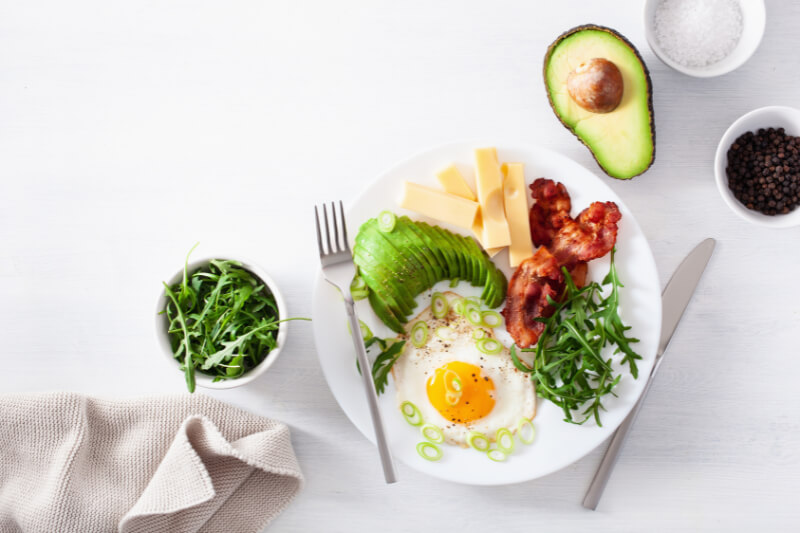
The ketogenic diet is based on a drastic reduction in carbohydrates (20-50g/day). By replacing sugar with fats (70% of intake), your body switches to a ketogenic mode. The standard model (SKD) remains the most widespread with 70% fats, 20% protein, 10% carbohydrates. This program favors foods such as avocado, fatty fish, eggs and nuts.
Imagine your body as a car switching from gasoline (carbohydrates) to diesel (fats). This change forces your metabolism to use fat reserves. Despite its promise of rapid weight loss, this diet requires precision in quantities, far from being an unlimited fat program. Prolonged satiety reduces cravings, an advantage for people wanting to avoid hunger.
The state of ketosis: the key to weight loss
By eliminating carbohydrates, you activate ketosis. Your liver converts fats into ketone bodies, an alternative energy source for the brain and muscles. This natural mechanism also activates during fasting. Ketones stabilize energy, avoiding spikes related to carbohydrates.
In the first days, the "keto flu" may occur: intense thirst, dry mouth, decreased appetite. To mitigate these temporary effects, increasing your intake of minerals (magnesium, potassium, sodium) is advised. Consult a professional before starting to assess the risks.
Ketosis transforms your body into a reserve-burning machine. Contrary to popular belief, proteins are not eliminated but carefully dosed. Urine or blood tests (1.5 to 3 mmol/l) confirm this metabolic state, redefining your relationship with food through foods rich in healthy fats.
What foods are allowed and forbidden on the keto diet?
Foods to prioritize to enter ketosis
The keto diet relies on healthy fats (70-90% of calories), moderate protein and carbohydrates limited to 20-50g/day. Its goal: activate ketosis, a metabolism where fats are converted into ketones for energy.
This method is effective for losing 3-5kg/month by avoiding glycemic spikes.
-
Meats and poultry: red meat, ham, chicken, turkey to preserve muscle mass.
-
Fatty fish: salmon, trout, tuna, mackerel for their anti-inflammatory omega-3s.
-
Eggs: whole, for their nutrients and satiety.
-
High-fat dairy products: butter, cream, unprocessed cheeses (cheddar, goat cheese) to promote ketosis.
-
Nuts and seeds: almonds, walnuts, chia seeds, flax for fiber and minerals.
-
Healthy oils: olive, coconut, avocado for cooking or seasoning.
-
Avocados: 2g net carbs/100g, to incorporate into dishes.
-
Low-carb vegetables: spinach, cauliflower, peppers for fiber and vitamins without leaving ketosis.
Foods to eliminate to succeed on your diet
-
Refined sugars: sodas, sweets, cakes, ice cream to be avoided so as not to break ketosis.
-
Starchy foods: wheat, rice, pasta, bread replaced by keto alternatives such as seed bread.
-
Legumes: peas, lentils, chickpeas to avoid in order to stay within the daily 50g of carbohydrates.
-
Root vegetables: potatoes, carrots to be replaced by leafy vegetables.
-
Fruits: limited to small amounts of berries for their low glycemic load.
-
"Light" products: avoid "light" versions that are high in hidden sugars.
-
Sweet condiments: ketchup, barbecue sauce replaced by homemade dressings.
To simplify this demanding diet, Cétofine 21 offers a high-protein program in 4 steps (weight loss, stabilization, etc.). More than 30,000 people have lost weight with our method, supported by nutritionists and high-quality French protein products. Discover our program or our protein sachets. Unlike keto, our approach includes a transition phase to avoid the yo-yo effect and guarantee permanent results.

The benefits and risks of the ketogenic diet
The ketogenic diet is based on a very low-carbohydrate diet (20-50g/day), high in fat and moderate in protein. It induces a state of ketosis in which the liver converts fats into ketone bodies, an alternative energy source for the body. This method, initially used in the 1920s to treat epilepsy, is today widely praised for its promise of rapid weight loss.
The potential benefits most often cited
Rapid weight loss is its main appeal. It is based first on water loss linked to the reduction of carbohydrates, then on the burning of fat reserves. Studies show that on average, followers lose 2 to 3 kg more than on a low-fat diet after 6 months. The satiety provided by proteins and fats (eggs, avocados, cheeses) reduces cravings. Ketone bodies reinforce this effect, limiting hunger spikes.
This diet can improve insulin sensitivity in type 2 diabetics, with a 15 to 30% reduction in medication needs according to some studies. It is also used under medical supervision to reduce epileptic seizures in children, with a success rate equivalent to that of a new medication. However, these benefits require strict monitoring by healthcare professionals.
The drawbacks and side effects not to be overlooked
The beginnings are often marked by the "keto flu": headaches, fatigue, nausea. These symptoms generally disappear within a few days. Other discomforts appear: constipation (affecting 60% of followers), bad breath, muscle cramps due to mineral imbalance. A supplementary intake of salt or magnesium can mitigate these effects.
Very restrictive, it excludes fruits, cereals and starches. Social meals become complex, requiring adaptations (dishes without bread, desserts with 90% dark chocolate). The lack of fiber worsens constipation. Compatible foods such as Brussels sprouts (4g of fiber per cup) or chia seeds (9.6g of fiber per ounce) help to address this problem.
Long-term effects remain poorly documented. The risks of deficiencies (B vitamins, magnesium) are real. It is contraindicated for people under treatment for diabetes (SGLT2 inhibitors) and requires medical consultation. One study highlights that 30% of users abandon the diet in less than 3 months due to its complexity.
A structured alternative like Cétofine 21, with its 4 progressive phases and personalized follow-up, offers a more balanced solution for 50-year-old women looking to lose weight safely.
Keto diet vs. high-protein diet: which is the best approach for you?
Two methods based on ketosis, but different philosophies
Both the keto diet and the high-protein diet trigger ketosis, a state where the body burns fat to produce ketone bodies. This mechanism promotes weight loss, but the two diets differ in their approach.
The keto diet is based on a very high fat intake (70% of calories), moderate in protein (20%) and very low in carbohydrates (10%). This method requires rigorous meal management.
| Characteristic | Classic Keto Diet | High-Protein Diet (Cétofine 21 type) |
|---|---|---|
| Fat intake | Very high (about 70%) | Very low |
| Protein intake | Moderate (about 20%) | High and controlled |
| Muscle protection | Secondary | Priority |
| Simplicity / Ease | Complex (macro calculation, specific cooking) | Simple and "turnkey" (structured program, meal sachets) |
| Support | Generally autonomous | Integrated (monitoring by advisors) |
| Post-diet management | High risk of yo-yo effect without transition | Integrated stabilization phase to avoid yo-yo effect |
Why the high-protein diet is a simpler and safer alternative
For an overweight menopausal woman, the high-protein diet of Cétofine 21 is more suitable. Unlike keto, it requires no calculation: the ready-to-use sachets eliminate the mental burden associated with meal preparation.
Muscle preservation is a key advantage. Thanks to its high-quality proteins (chemical score > 100), Cétofine 21 protects muscle mass during weight loss, essential for maintaining a toned figure after 50.
Personalized support by advisors is a major asset. The 4-phase program (weight loss, stabilization, rebalancing) includes a maintenance phase to avoid the yo-yo effect. Since 1996, Cétofine 21 has helped thousands of people achieve their goals with personalized support for permanent results.
Ready to start? Discover the high-protein method or learn how to get started. With a satisfaction rate of 4.8/5, Cétofine 21 combines simplicity, effectiveness and French expertise.
A 4-phase method for permanent weight loss
Since 1996, Cétofine 21 has been supporting women, especially after age 50, with a high-protein diet structured in 4 progressive phases. Unlike keto (very high in fat and complex to follow), our approach combines simplicity, effectiveness and safety to avoid the yo-yo effect for permanent results.
-
Phase 1 – Booster: rapid loss (up to 2.5 kg/week) through a strict diet based on protein sachets and vegetables.
-
Phase 2 – Starter: reintroduction of natural proteins, continued weight loss.
-
Phase 3 – Transition: learning good eating habits.
-
Phase 4 – Stabilization: gradual return to regular meals to consolidate the loss.
Our turnkey kits (-3, -6, -10, 15 and -20 kg) include products, menus and personalized advice, to lose weight without hunger or deficiencies.
More than 30,000 satisfied customers (average rating 4.8/5) testify to permanent and fatigue-free weight loss.
Cétofine support: expertise and French products
Each high-protein sachet (18 g of high-quality protein, chemical score > 100) preserves muscle mass and is prepared in 1 minute. With more than 180 recipes (soups, desserts, snacks), monotony disappears.
A nutrition advisor remains available to guide each step. Result: supervised, motivating and permanent weight loss.
The demanding keto diet gives way to Cétofine 21, a simple, supervised and 100% French high-protein alternative for permanent results.

FAQ - frequently asked questions about the keto diet
What foods can I eat on the keto diet?
On the keto diet, you'll favor foods rich in healthy fats and moderate in protein. You can enjoy meats (chicken, beef), fatty fish like salmon, eggs, unprocessed cheeses (cheddar, mozzarella), low-carb vegetables (broccoli, avocado), nuts and seeds, and healthy oils (olive, coconut).
What foods should I avoid on the keto diet?
Foods to avoid include sugars (candy, sodas), starches (bread, pasta), high-carbohydrate fruits (bananas, grapes), legumes (beans, lentils), and sweet sauces. Even "light" products, often processed, should be avoided.
Why might the keto diet be inadvisable?
The keto diet, while popular, presents challenges. The first few weeks can cause "keto flu" (fatigue, headaches), and its restrictive nature makes it difficult to follow long-term. Additionally, the risks of deficiencies or metabolic imbalances require medical advice before starting. For a less restrictive solution, a structured method like Cétofine 21 offers a safe alternative, without yo-yo effects.
Does the keto diet promote weight loss?
Yes, the keto diet can lead to rapid weight loss, especially through reduced water retention and fat burning. However, its long-term effectiveness depends on its permanence.
Is cheese allowed in the keto diet?
Fatty, unprocessed cheeses (cheddar, goat cheese, mozzarella) are allowed in moderate quantities. They fit well into this diet, but be careful of excess which could disrupt balance.
What breakfast should I adopt on the keto diet?
Opt for simple, balanced meals: scrambled eggs with avocado, plain whole-milk yogurt with seeds, or a spinach and almond butter smoothie. These ideas combine speed with respect for keto principles.
What starches should be avoided on the keto diet?
Classic starches (rice, pasta, potatoes) should be avoided. Replacing them with fiber-rich vegetables (cauliflower, broccoli) or low-carb alternatives (keto bread) allows you to vary your meals without leaving ketosis.
Which yogurt to choose for the keto diet?
Plain or Greek yogurts that are unsweetened and high in fat are perfect. Add a few berries for a bit of flavor, but not too many.
What is the best diet to lose weight quickly?
The keto diet can be effective, but its strict adherence is not suitable for everyone. For an active but not particularly athletic person, a high-protein diet structured in 4 phases, like Cétofine 21, combines speed, simplicity and stability of results. It guides you without calculations, with adapted menus and personalized support, for a serene and permanent weight loss.
 Sugar-free diet: 15-day menu and tips for success
 Why unexplained weight gain: understanding the causes
 Managing your pregnancy weight gain with complete peace of mind