 En
En
 Français
 Español
 Italiano












The protein diet for weight loss

Protein has long demonstrated its value in addressing overweight issues. A source of amino acids with very high biological value, it allows the maintenance of muscle mass during controlled fasting. Evans, as early as 1929, thus offered his patients protein diets of remarkable effectiveness. However, it was in the 1970s that the protein diet as we know it today truly took off: many scientists were behind it, including Professor Blackburn (Harvard, U.S.A.).
The protein diet is a safe and medically supervised method to effectively treat excess weight. Whether it's mild, moderate, or significant, the protein diet can overcome it. Inspired by Professor Blackburn's work on the Protein Sparing Modified Fast, it's the ideal nutritional tool for achieving perfectly successful weight loss:
- rapid weight loss on fat mass for enhanced motivation.
- protection of muscle mass and skin tone thanks to protein intake (no "flabby" effect or withered skin).
- comfortable weight loss, both for the patient (satiating and psychotonic effect of ketogenesis / ease of the diet / diversity of flavors) ... and for the doctor (1>2>3>4 method).
- progressive dietary re-education for permanent maintenance of the results obtained.
The high-protein diet for rapid and comfortable weight loss
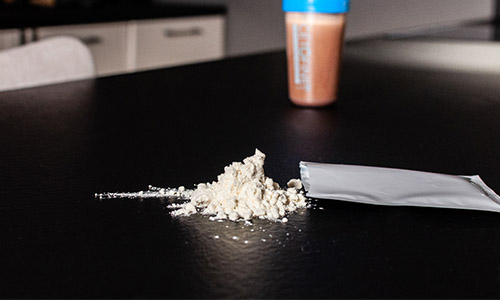
Rapid weight loss
Unlike a classic low-calorie diet where a balance of carbohydrates / proteins / fats is sought, the high-protein diet works on reducing dietary carbohydrates and fats, as well as on the massive intake of proteins of high biological value (for the "weight loss" phase only).
We play the card of controlled imbalance to provoke rapid melting of adipose tissues.
Thus, you can lose weight quickly thanks to the reduction of calories ingested by the metabolism. We mainly consume protein-rich foods (meal replacements, dairy products, lean meats...) and vegetables (for transit, vitamins and minerals...).
Following a high-protein diet to lose weight is very effective if you want to lose weight quickly.
Comfortable weight loss
During the high-protein diet, your body will enter ketosis. The production of ketone bodies will provide unparalleled comfort: you will feel neither hunger nor fatigue.
The diversity of flavors offered and the ease of following make the Cétofine 21 program a pleasant and very simple method to follow.
- 180 protein products to vary the pleasures and not get tired
- Clear and easy-to-follow phase sheets
- Free practical guide (recipes and tips to succeed with the diet)
- Delivery within 24 working hours in mainland France in discreet packaging
The protein diet to protect muscle mass
Proteins consumed at a rate of 1.5 g per kilo of ideal body weight per day nourish and protect muscle mass, skin, and organs: the intake of exogenous amino acids indeed prevents the transformation and then the breakdown of endogenous amino acids into glucose.
The interstitial supporting tissues are also preserved and the skin maintains its elasticity: there is no skin sagging, even in cases of pronounced weight loss (you can lose up to 2.5 kilos per week).
Physical activity is not mandatory during the high-protein diet but it remains recommended. Indeed, practicing sports has numerous beneficial effects on the body.
The protein diet for dietary rebalancing

The protein diet is an interesting method, as it constitutes a global approach to treating overweight. From weight loss to stabilization, from weight goals to education on good dietary habits, the Cétofine 21 program covers all these aspects. We control calorie intake to lose weight, which is coupled with a high-protein diet. Step by step, we reintegrate increasingly rich foods.
You will be constantly motivated by your results. You will learn, level by level, to return to a balanced diet that rhymes with pleasure and confidence: the goal is achieved!
It's the gentle and progressive reintroduction of different food groups (natural proteins, fruits, bread then starches) after the Protein Diet (Level 1) that conditions the perfect success of the entire diet.
Levels 2, 3 and 4 follow after Level 1, avoiding a too sudden return to a diet rich in carbohydrates that would inevitably lead to a rebound effect.