 En
En
 Français
 Español
 Italiano












What is the best natural appetite suppressant for weight loss?
The most effective natural appetite suppressant combines protein and soluble fiber. Protein activates hormones that signal to the brain that you have eaten enough; soluble fiber, such as glucomannan from konjac, expands in the stomach and slows digestion.
Among foods, konjac, legumes, oatmeal, chia seeds, and eggs are the most filling. A few simple habits (drinking before meals, sleeping well, eating slowly) enhance their effect.
No single food causes weight loss on its own. However, choosing what you put on your plate wisely helps you eat less without fighting hunger, and that is often what makes the difference between a diet abandoned after ten days and lasting weight loss.

How does a natural appetite suppressant work?
Fibers: volume and a satiating gel
Not all fibers play the same role. Soluble fiber (konjac, oats, legumes, apples, chia) absorbs water and forms a thick gel in the stomach. This gel slows gastric emptying: food stays longer in the stomach, prolonging the feeling of fullness. It also slows the absorption of sugars into the bloodstream, which reduces blood sugar spikes and subsequent cravings.
Insoluble fiber, found mainly in green vegetables and bran, does not form a gel. It adds bulk to your plate with very few calories and supports digestive transit. For a complete appetite-suppressant effect, the ideal approach is to combine both.
Protein: The Most Powerful Satiety Signal
Of all nutrients, protein is the most satiating. It stimulates the secretion of two gut hormones, GLP-1 and peptide YY, which signal to the brain that the meal is sufficient. It also curbs ghrelin, the hormone that triggers hunger. In fact, injectable obesity treatments act on this very same GLP-1: discover natural alternatives to stimulate GLP-1.
A meal rich in protein and fiber therefore keeps you full much longer than a meal of the same caloric value composed mainly of simple sugars.
The 8 Best Natural Appetite Suppressants to Add to Your Plate
| Food | What keeps you full | Recommended serving |
|---|---|---|
|
Konjac |
Glucomannan (soluble fiber) |
1 g of glucomannan with a large glass of water before the meal |
|
Lentils, chickpeas, kidney beans |
Fiber and plant protein |
150 to 200 g cooked |
|
Green vegetables |
Volume, insoluble fiber, water |
As much as you like, or almost |
|
Oat flakes |
Beta-glucans (soluble fiber) |
30 to 40 g |
|
Chia seeds |
Mucilage (soluble fiber) |
1 tablespoon |
|
Apple |
Pectin (soluble fiber) |
1 whole fruit, with the skin |
|
Almonds |
Fiber, protein, and healthy fats |
15 to 20 almonds |
|
Eggs |
High-quality protein |
2 eggs |
| Food |
Konjac |
|---|---|
| What satisfies hunger |
Glucomannan (soluble fiber) |
| Reference portion |
1 g of glucomannan with a large glass of water before a meal |
| Food |
Lentils, chickpeas, kidney beans |
|---|---|
| What keeps you full |
Fiber and plant-based protein |
| Standard serving size |
150 to 200 g cooked |
| Food |
Green vegetables |
|---|---|
| What keeps you full |
Volume, insoluble fiber, water |
| Serving size guide |
As much as you like, or almost |
| Food |
Rolled oats |
|---|---|
| What fills you up |
Beta-glucans (soluble fiber) |
| Reference portion |
30 to 40 g |
| Food |
Chia seeds |
|---|---|
| What keeps you full |
Mucilage (soluble fiber) |
| Reference portion |
1 tablespoon |
| Food |
Apple |
|---|---|
| What keeps you full |
Pectin (soluble fiber) |
| Serving size guide |
1 whole fruit, with the skin |
| Food |
Almonds |
|---|---|
| What keeps you full |
Fiber, protein, and healthy fats |
| Serving size guide |
15 to 20 almonds |
| Food |
Eggs |
|---|---|
| What fills you up |
High-quality protein |
| Reference portion |
2 eggs |
Konjac, the champion of fullness
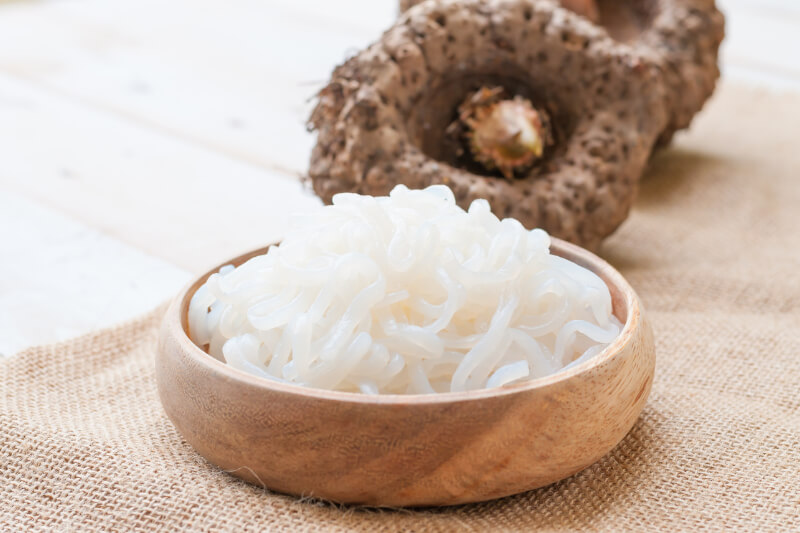
Konjac is an Asian plant whose root contains glucomannan. This soluble fiber can absorb several dozen times its weight in water. In the stomach, it forms a bulky gel that quickly creates a feeling of fullness, with virtually no calories.
To learn all about this plant, read our article on konjac, a true weight-loss ally.
It is the only fiber whose effect on weight loss is recognized by the European Food Safety Authority (EFSA). To achieve this effect, you must follow a low-calorie diet and take 3 g of glucomannan per day, in three 1 g doses before meals, each with one or two glasses of water.
You can find konjac in the form of pasta, rice, or a supplement to dilute. To learn all about this plant, read our article on konjac, a true weight-loss ally and discover our selection of konjac pasta and rice.
During your program, our konjac appetite suppressant helps you reduce feelings of hunger. Dilute one stick in 150 mL of water before lunch and, if needed, before dinner.
To enjoy its effects every day, try our konjac appetite suppressant, to dilute in a glass of water before lunch and dinner.
Legumes: the dual action of fiber and protein
Lentils, chickpeas, and kidney beans combine both satiety triggers: about 7 to 8 g of fiber and 8 to 9 g of protein per 100 g cooked. Their low glycemic index provides you with steady energy for several hours. Add them to salads, soups, or as a side dish instead of white rice or pasta.
Green vegetables, to fill your plate without calories
Broccoli, spinach, zucchini, and green beans contain plenty of water and insoluble fiber for very few calories. Starting your meal with a large plate of raw vegetables or a bowl of vegetable soup naturally reduces the amount you eat afterward.
Rolled oats, the ultimate breakfast ally
Rich in beta-glucans, oatmeal also forms a gel in the stomach. Choose traditional oats over instant varieties, which have a higher glycemic index: your energy stays stable until lunch.
Chia seeds: a gel ready in minutes
When they come into contact with liquid, chia seeds form a mucilage that swells within about ten minutes. Add a tablespoon to plain yogurt, a drink, or a bowl of oats. They are still calorie-dense: to find the right amount, see our guide on how many seeds to eat per day to lose weight.
The apple, the ultimate appetite-suppressing snack
An apple provides around 3 g of fiber, including pectin, which is concentrated in the skin. Eaten whole, it is much more filling than juice: chewing and fiber slow digestion. It is an ideal snack around 4 p.m. to keep you going until dinner.
Almonds, in small quantities
Fiber, plant-based protein, and healthy fats make almonds a very filling snack. Their high calorie content means you should stick to a small handful, or 15 to 20 almonds. Paired with an apple, they make a balanced snack.
Eggs, for a filling breakfast
Eggs have long served as a benchmark for measuring protein quality because they contain all essential amino acids. Two eggs for breakfast, paired with spinach or tomatoes, help curb mid-morning cravings.
Habits that enhance the appetite-suppressant effect
Drink a large glass of water before sitting down to eat
About 500 ml of water drunk half an hour before a meal partly fills the stomach and helps you eat less, without any effort. Mild thirst can also be mistaken for the urge to snack: a glass of water helps tell the difference. Find out why drinking water helps with weight loss and how to stay properly hydrated.
Eat slowly
Satiety signals take about twenty minutes to reach the brain. Eating too quickly can lead you to exceed your needs before feeling full. Put your cutlery down between bites and take the time to chew.
Get enough sleep
Lack of sleep disrupts appetite hormones: ghrelin, which triggers hunger, increases, while leptin, which signals fullness, decreases. The result: more sugar cravings the next day. A consistent bedtime schedule and 7 to 8 hours of sleep per night help keep your appetite stable.
Soothe stress
Prolonged stress maintains high cortisol levels, a hormone that drives you toward fatty and sugary foods. A few minutes of slow breathing, a walk, or regular physical activity can reduce these comfort cravings.
The high-protein diet: a supervised natural appetite suppressant
Protein at every meal for continuous fullness
A high-protein diet maximizes the natural appetite-suppressing effect: every meal and snack provides a serving of protein, helping you feel full throughout the day. To make the most of this effect, find out when to consume protein for weight loss.
Protein has another essential role: it protects your muscles during weight loss. By preserving your muscle mass, you maintain an active metabolism and a toned figure. All our Cétofine 21 high-protein sachets are made with proteins of high biological value, mainly milk proteins. Their chemical score is above 100: they provide all the essential amino acids your body needs.
Ketosis, a natural appetite suppressant
During a high-protein diet, sugars and fats are significantly reduced. After 48 to 72 hours, the body taps into its fat reserves and produces ketone bodies, which have a natural appetite-suppressant effect. This is why the feeling of hunger, sometimes present during the first two days, fades away afterwards.
The 4 stages of the Cétofine 21 method
The Cétofine 21 method takes place in four progressive stages:
- Stage 1, the protein diet: rapid weight loss, averaging 2.5 kg per week;
- Stage 2, the modified protein diet: a regular meal is reintroduced, for an average weight loss of about 1.5 kg per week;
- Stage 3, transition: foods are gradually reintroduced, and you learn the rules of a balanced diet;
- Stage 4, stabilization: you consolidate your new weight to avoid the yo-yo effect.
To get through each stage with confidence, rely on our tips for succeeding with your high-protein diet without giving in.
French expertise since 1996
A 100% French laboratory specializing in high-protein dietetics since 1996, Cétofine 21 has already supported over 30,000 customers and boasts a 4.8/5 rating on Google. Our nutrition advisors are available to answer your questions by phone, Monday through Friday.
The high-protein diet is intended for healthy adults. It is not recommended during pregnancy or breastfeeding, nor in cases of kidney or liver impairment.
If you have a chronic illness or are undergoing medical treatment, consult your doctor: to learn more, read our article who can follow a high-protein diet?
FAQ
Are natural appetite suppressants in capsules or sticks effective?
Their effectiveness depends on the plant used. Konjac glucomannan is the only appetite-suppressing fiber whose effect on weight loss is recognized in Europe, provided it is combined with a low-calorie diet. For most other plants sold as appetite suppressants, such as garcinia or griffonia, no weight-loss claim is currently authorized.
Does konjac have side effects?
It may cause bloating during the first few days. Always take it with plenty of water to prevent it from swelling in the throat or esophagus, and avoid it if you have difficulty swallowing. Like any fiber, it may reduce the absorption of certain medications: take them separately.
Do tea or coffee suppress hunger?
Their appetite-suppressing effect is modest and short-lived. When taken without sugar, they mainly help you stay hydrated and tide you over between meals. To choose wisely, see our guide which tea to drink to lose weight.


 What Is the Best Natural Appetite Suppressant for Weight Loss?
 How to Lose 33 Pounds (15 kg) Without Exercise, for Good
 Chrononutrition: Slim Down According to Your Biological Clock