 En
En
 Français
 Español
 Italiano









Weight gain and menopause: how to avoid it?
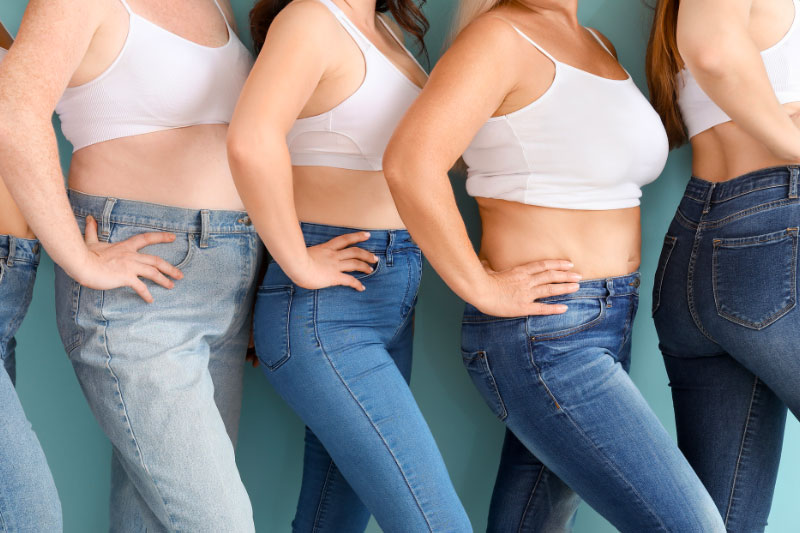
Many women experience weight gain when they enter the menopausal period. The hormonal fluctuations that accompany this stage promote fat accumulation, often localized around the abdomen, and these extra pounds can be stubborn. However, there are solutions to deal with this change.

Why does menopause lead to weight gain for the majority of women?
During menopause, the body gradually stops producing female ovarian hormones, especially estrogen. At the same time, testosterone, a male hormone, continues to be produced in reduced quantities. This hormonal disruption causes a redistribution of fat, favoring its accumulation in the abdominal region rather than on the thighs and hips. The woman's silhouette undergoes changes, tending towards a slightly more masculine shape, characterized by a decrease in hips and an increase in belly, which is commonly referred to as menopausal weight gain.
Appetite increases
Hormonal changes associated with menopause have the effect of increasing appetite and reducing the feeling of satiety. In summary, this results in an increase in hunger and, consequently, the amount of food ingested. During these cravings, some women tend to opt for foods high in fat or sugar, thus worsening weight gain.
Metabolism slows down
With age, metabolism slows down. On average, after menopause, the body burns 100 to 200 fewer calories per day. The body becomes less tolerant of excesses, such as aperitifs, restaurant meals, or slightly indulgent vacations, which is reflected on the scale. The accumulated kilos become more difficult to lose than at the age of 20 or 30.
Muscle mass decreases
After 50 years old, muscle mass naturally tends to decrease. However, a muscular body burns calories more easily. This decrease in muscle mass contributes to an increase in fat mass. Normally, fat mass represents about 20 to 25% of body weight, or between 10 and 15 kg, but during menopause, this percentage increases to an average of 30%. This significant increase inevitably results in weight gain.
This is added to a gradual decrease in physical activity starting from the age of fifty, further reducing our muscle mass and thus promoting weight gain during menopause.
Weight gain and menopause: a highly variable situation depending on the women concerned
Weight gain during menopause is not inevitable, but it still affects more than 60% of women. On average, a menopausal woman gains between 4 and 5 kilograms (8.8 to 11 pounds), sometimes more.
Menopause symptoms usually begin around the age of 45 to 55, but this can vary from woman to woman. Some may experience signs of menopause as early as their forties. Before menopause, there is a period called perimenopause which can last several years. Symptoms of perimenopause and menopause include hot flashes, mood changes, irregular periods, sleep problems, and other changes due to hormonal variations. It's important to know that the timing of these symptoms varies from woman to woman.
Weight gain often begins as early as perimenopause, the period preceding menopause by a few years, during which hormone levels gradually decline.
However, not all women gain weight during menopause due to various reasons. It depends on genetics, diet, level of physical activity, stress management, and how hormones affect the body. Some women maintain their weight by eating healthily, staying active, and managing stress. It is possible to maintain a stable weight or lose weight during menopause by adopting a healthy lifestyle.
How to prevent weight gain during menopause?
As mentioned previously, the weight gained after menopause is often stubborn, so the ideal approach is to avoid it. To do this, it is wise to take action early, during perimenopause.
Limit muscle mass loss before menopause
The first step is to limit the loss of muscle mass. It is therefore essential to have regular physical activity and to consume proteins. They can be of plant or animal origin. You can also consume protein-rich meal replacements (high-protein products, high-protein sachets, high-protein snacks), during at least two out of three meals.
High-protein products or high-protein sachets can help you consume more protein if you're not used to consuming much on a daily basis. Indeed, it may prove easier for some women to consume a high-protein drink, a high-protein soup or even a high-protein dessert. These high-protein products contain on average 18 grams of high biological value protein.
To give you an idea:
- A 100-gram hamburger patty contains 20 grams of protein
- 100 grams of salmon provide approximately 20 grams of protein
- A medium egg (about 50 g) provides approximately 6 grams of protein
- 100 grams of cottage cheese contain approximately 7 grams of protein
- 100 grams of cooked lentils provide approximately 9 grams of protein
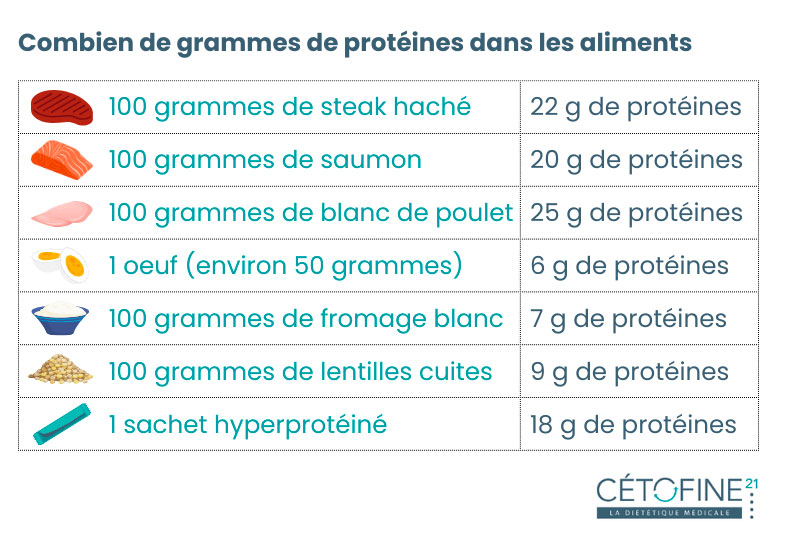
As a general rule, an adult should consume 0.83 grams of protein per kilogram of body weight per day. When you approach menopause, you can consume up to 1 gram of protein per kilogram of body weight per day.
For example, if you weigh 60 kilos (132 pounds), you should consume 60 grams of protein each day to maintain your muscle mass. Consuming a few high-protein sachets will help you meet your daily protein needs.
It is also entirely possible to replace your usual snacks, which are probably too sweet, with high-protein snacks. You can replace your usual cookies or cakes with protein-rich versions, which are also lower in calories.
Indeed, high-protein products are initially designed to support overweight or obese individuals as part of a weight loss diet. These high-protein products contain few carbohydrates and fats, and are low in calories. They will help you maintain your figure while contributing to the maintenance of your muscle mass.
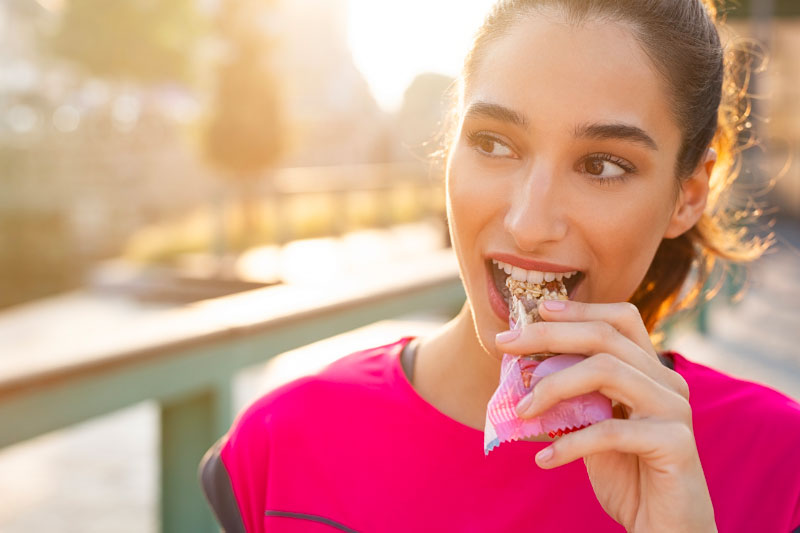
Discover the healthy snack: high-protein bar with cereals and red fruits
Reduce weight gain through appropriate nutrition
To avoid weight gain during menopause, it is important to adjust or modify your diet. Here are some dietary recommendations:
-
Incorporate foods rich in omega-3 and omega-6 into your diet (fish, olive oil, nuts, etc.) as they have a positive effect on hormonal regulation.
-
Ensure sufficient protein intake (plant-based, animal-based, or protein-rich meal substitutes and supplements) to counter muscle mass loss.
-
Favor whole foods and foods rich in fiber to prevent constipation and bloating, thus contributing to a flatter stomach. Many vegetables are rich in fiber. They allow you to increase your food volume while controlling calorie intake.
-
Limit the consumption of alcohol and fatty foods, such as regular chips sold in supermarkets, which can contribute to weight gain. Favor low-calorie snacks such as high-protein and low-calorie chips.
-
Learn to manage cravings by having healthy options such as fruits, yogurts, or high-protein and low-calorie bars within reach, rather than giving in to vending machine temptations.
In addition to limiting weight gain, adopting a balanced diet can help alleviate symptoms related to menopause (hot flashes, risk of cardiovascular diseases, etc.).
Physical activity to prevent weight gain during menopause
Practicing a sport or regular physical activity (walking, swimming, yoga, Pilates, fitness, etc.) helps to limit weight gain associated with menopause.
Exercises that strengthen deep muscles, such as Pilates, are excellent for toning the abdominal belt and thus reducing belly fat gain.
Not only does this burn calories, but it also promotes an increase in muscle mass, which stimulates metabolism.
Finally, physical exercise helps reduce the production of cortisol, the stress hormone, while releasing dopamine and endorphins. Thus, a relaxed and fulfilled woman is less likely to turn to food to compensate for stress.

How to lose weight during menopause?
Have you followed all of our advice above, but nothing works, your excess pounds refuse to leave you? Why not try our high-protein diet method, to lose weight quickly, permanently and easily!
With the Cetofine 21 program, over 30,000 people have lost weight. Why not you?
How does a high-protein diet work for weight loss after menopause?
The high-protein diet is structured into 4 stages, each targeting a specific goal. From weight loss to achieving a balanced diet, you progress gradually through these stages according to your weight loss. Thanks to our protein-rich products, reach your ideal weight by following these 4 crucial steps for an effective diet.
The high-protein diet represents a simple and quick way to lose weight.
It's also an approach that will allow you to say goodbye to your excess weight for good. Indeed, we have developed two transition and stabilization stages, which allow you to gradually return to a balanced diet. This way, you'll avoid shocking your body and you'll adopt new, healthier eating habits. In this manner, you'll avoid experiencing the famous yo-yo effect.
From the weight loss stage to the stabilization stage, the Cétofine 21 protein diet offers a comprehensive and foolproof approach when followed rigorously. To do so, you'll find all our advice on our blog!
How to lose weight with proteins?
A high-protein diet doesn't simply mean eating meat. In fact, we have developed various recipes for meal replacements and snacks, containing high biological value proteins.
These high-protein products contain few carbohydrates, fats and are very low in calories. This way, you will control your calorie intake and lose weight during menopause, while maintaining your muscle mass thanks to the proteins.
Additionally, proteins provide a satiety effect. You will avoid the cravings encountered during menopause and wait without worry for the next meal to eat.
Moreover, being on a diet doesn't mean "eating twice a day". As part of a high-protein diet, you will have breakfast, a snack at 10 am, lunch, a snack at 4 pm, and a meal for dinner. This way, you will avoid feeling deprived of food, which is far too frustrating and pushes you to binge on food once the high-protein diet is over.
How to prepare my plate to lose weight during menopause?
Be careful, stop the misconceptions, you won't be consuming only protein powder in sachets. Our high-protein preparations are designed to be delicious and varied. Then, as you progress through the stages, you'll learn to compose your weight-loss meals. Meals composed of animal or dairy proteins, cooked or raw vegetables, while avoiding sources of bad fats.
Discover our high-protein essentials: cocoa drink, cappuccino, vegetable soup, mushroom soup, herb omelets, chocolate or vanilla desserts, chocolate chip pancakes, chocolate cake... Discover all our products on our online store.
You want to lose weight without overthinking it? Discover our weight loss kits to lose weight easily and quickly after menopause. They contain everything you need to lose 3 kilos in 2 weeks, 6 kilos in 1 month or even 10 kilos in 6 weeks.
If you have any other questions about the high-protein diet or if you would like support during your weight loss journey, please don't hesitate to contact our customer service at 05 79 87 01 40.
 How to cook tofu: tips and tasty recipes
 List of plant proteins: the best slimming sources
 Succeeding at weight loss with a sugar-free week