 En
 Français
 Español
 Italiano













Low-calorie diet: 7-day menu and a method for lasting weight loss
The key takeaway : a low-calorie diet means eating slightly fewer calories than your body burns, so it draws the energy it needs from its fat stores. A moderate deficit of 300 to 500 calories per day can lead to a loss of about 0.3 to 0.5 kg per week, without excessive fatigue or frustration.
Counting calories can quickly become discouraging. You may worry about being hungry all the time, lacking energy, or regaining the weight you lost after one slip-up. These concerns are valid: it is almost always the method, not a lack of willpower, that causes a diet to fail.
So we explain in simple terms how an energy deficit works, provide a complete 7-day menu, and show how a structured program can replace calorie counting when it becomes too restrictive.
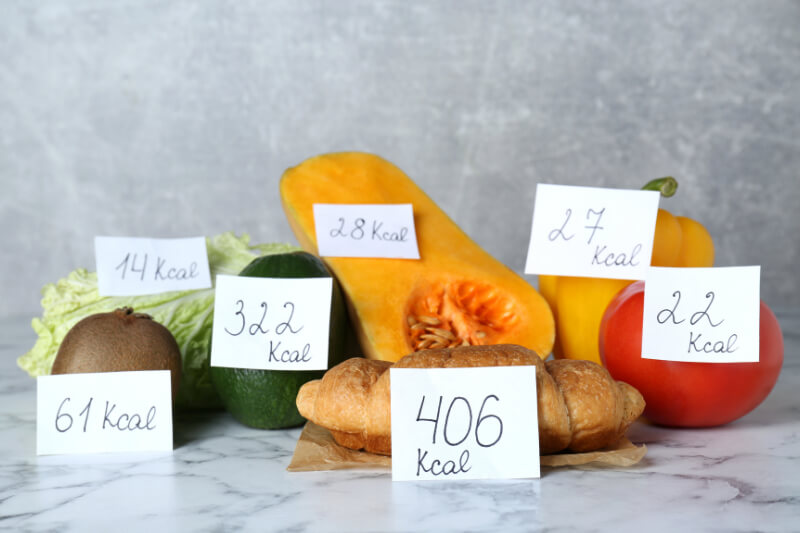
Understanding low-calorie diets for lasting weight loss
The principle of an energy deficit, explained simply
Your body uses energy constantly: to breathe, maintain its temperature, digest food, and move. This is your total energy expenditure. As long as the calories you consume exactly match the calories you burn, your weight remains stable.
A low-calorie diet deliberately creates a small deficit. To make up for it, your body draws on its reserves, primarily body fat. This is the only mechanism by which weight loss occurs, regardless of the diet you choose.
In practical terms:
- A sedentary adult woman burns an average of 1,800 to 2,200 kcal per day.
- A sedentary adult man burns an average of 2,200 to 2,700 kcal per day.
- Subtract 300 to 500 kcal from that total to get your daily target.
- Below 1,200 kcal per day, a restricted diet should never be followed without professional supervision.
To better assess your starting point, you can calculate your BMI and see how your current weight relates to your body type.
Why a moderate calorie deficit is better than a drastic one
Cutting your calorie intake in half overnight produces dramatic results in the first week, but then creates three problems:
- Hunger becomes unmanageable and leads to overeating.
- Fatigue and irritability set in.
- Some of the weight lost comes from muscle mass, which lowers your resting energy expenditure.
A moderate calorie deficit avoids these pitfalls. You lose weight more slowly, but you lose mostly fat and can stick with it over time. That’s exactly what successful weight loss calls for.
Signs that you’re restricting too much
Pay attention to your body. Watch for these warning signs:
- Constant cravings and obsessive thoughts about food
- Difficulty concentrating and sleep disturbances
- Irritability, nervousness
- Unusual fatigue during exercise
- Feeling cold, hair loss, missed periods
If you notice any of these signs, increase your intake by 200 kcal and reassess after a week.
Who a low-calorie diet is for—and who it isn't suitable for
This approach is suitable for adults who are overweight, comfortable preparing their own meals and tracking a few numbers.
It is not recommended:
- for growing children and adolescents;
- for pregnant or breastfeeding women;
- for frail older adults, for whom muscle loss is a major risk;
- for people with a history of eating disorders;
- for people with kidney or liver disease, treated diabetes, or heart disease, without first consulting a doctor.
If you’re unsure, talk to your doctor before starting. Professional advice won’t slow down your plans: it will help you proceed safely.
7-day menu for your low-calorie week
Here’s a full week of meals built around three principles: protein at every meal to help you feel full, plenty of vegetables, and controlled portions of low-glycemic-index starchy foods. Aim for about 1,500 kcal per day, adjusting for your energy expenditure.
| Day | Breakfast | Lunch | Snack | Dinner |
|---|---|---|---|---|
|
Monday |
Poached egg, 1 slice of whole-wheat bread, unsweetened tea or coffee |
Steamed cod fillet, green beans, 2 tbsp brown rice |
1 apple |
Homemade creamy zucchini soup, 1 plain yogurt |
|
Tuesday |
Fat-free fromage blanc, 2 tbsp rolled oats, a few berries |
Turkey cutlet, ratatouille, 100 g quinoa |
10 almonds |
Leek soup, 1 slice of cooked ham |
|
Wednesday |
Scrambled eggs, cherry tomatoes, 1 whole-wheat crispbread |
Lentil salad, diced feta, arugula, lemon vinaigrette |
1 plain yogurt |
Pollock baked in parchment, braised fennel |
|
Thursday |
Greek yogurt, 1 kiwi, 1 tsp chia seeds |
Grilled chicken, steamed broccoli, 2 tbsp bulgur |
1 handful of raw vegetables |
Mushroom omelet, green salad |
|
Friday |
Whole-wheat bread, unsweetened almond butter, 1 orange |
Chickpea and spinach curry, 2 tbsp basmati rice |
1 pear |
Vegetable broth, 2 hard-boiled eggs |
|
Saturday |
Fat-free fromage blanc, cinnamon, 1 handful of blueberries |
5% fat ground beef patty, green beans, roasted sweet potato |
1 raw carrot |
Creamy pumpkin soup, 1 serving of fresh cheese |
|
Sunday |
Soft-boiled egg, 1 slice of whole-wheat bread, coffee |
Steamed salmon, zucchini, mâche salad |
1 serving of applesauce with no added sugar |
Mixed vegetable soup, 1 plain yogurt |
| Day |
Monday |
|---|---|
| Breakfast |
Poached egg, 1 slice of whole-wheat bread, unsweetened tea or coffee |
| Lunch |
Steamed cod fillet, green beans, 2 tbsp brown rice |
| Snack |
1 apple |
| Dinner |
Homemade creamy zucchini soup, 1 plain yogurt |
| Day |
Tuesday |
|---|---|
| Breakfast |
Fat-free plain fromage blanc, 2 tbsp rolled oats, a few berries |
| Lunch |
Turkey cutlet, ratatouille, 100 g quinoa |
| Snack |
10 almonds |
| Dinner |
Leek soup, 1 slice of cooked ham |
| Day |
Wednesday |
|---|---|
| Breakfast |
Scrambled eggs, cherry tomatoes, 1 whole-wheat crispbread |
| Lunch |
Lentil salad with diced feta, arugula and lemon vinaigrette |
| Snack |
1 plain yogurt |
| Dinner |
Pollock baked in parchment, braised fennel |
| Day |
Thursday |
|---|---|
| Breakfast |
Greek yogurt, 1 kiwi, 1 tsp chia seeds |
| Lunch |
Grilled chicken, steamed broccoli, 2 tbsp bulgur |
| Snack |
1 handful of raw vegetables |
| Dinner |
Mushroom omelet, green salad |
| Day |
Friday |
|---|---|
| Breakfast |
Whole-wheat bread, unsweetened almond butter, 1 orange |
| Lunch |
Chickpea and spinach curry, 2 tbsp basmati rice |
| Snack |
1 pear |
| Dinner |
Vegetable broth, 2 hard-boiled eggs |
| Day |
Saturday |
|---|---|
| Breakfast |
Fat-free fromage blanc, cinnamon, 1 handful of blueberries |
| Lunch |
5% fat ground beef patty, green beans, roasted sweet potato |
| Snack |
1 raw carrot |
| Dinner |
Creamy pumpkin soup, 1 serving of fresh cheese |
| Day |
Sunday |
|---|---|
| Breakfast |
Soft-boiled egg, 1 slice of whole-wheat bread, coffee |
| Lunch |
Steamed salmon, zucchini, mâche salad |
| Snack |
1 serving of applesauce with no added sugar |
| Dinner |
Mixed vegetable soup, 1 plain yogurt |
The rules that make this meal plan sustainable
- Drink water before eating. A large glass of water 15 minutes before a meal reduces how much you eat.
- Never skip a meal. Skipping a meal can lead to snacking in the evening.
- Add flavor without adding calories. Lemon, vinegar, fresh herbs, turmeric, paprika, garlic: flavor doesn’t have to add calories.
- Steam, bake, or cook in parchment packets. An extra tablespoon of oil adds 90 kcal.
- Vary your protein sources. Legumes are an affordable, filling alternative to meat.
Our article on the list of plant-based proteins covers the best options for weight loss.
What if the scale stops moving?
After a few weeks, weight loss almost always slows down: your lighter body burns less energy. This is normal, not a failure. Before cutting your intake further, check your actual portions, activity level, and sleep.
We’ve devoted a full article to this plateau: why am I not losing weight despite dieting and exercising?

When counting calories has its limits
A conventional low-calorie diet works. But it puts everything on you: weighing, calculating, planning, and resisting temptation. Many people give up not because they lack motivation, but because they’re tired of managing all the details.
The high-protein diet: a reduced-calorie diet with the calculations done for you
A high-protein diet is a type of low-calorie diet, not an opposing approach. The principle remains the same—consuming fewer calories than you burn—but two factors change:
- Protein intake is deliberately high, which limits muscle loss during weight loss.
- Carbohydrates are sharply reduced, putting the body into ketosis: without readily available sugars, it uses fat as its primary fuel.
An important clarification: it’s not ketosis that protects your muscles; it’s the high protein intake that accompanies it. The two go together, and this combination is what makes the approach worthwhile.
What this changes day to day
- No more weighing or calculating: the amounts are already set in each packet.
- You feel much fuller, as protein is the most filling nutrient.
- The guidelines are clear, reducing opportunities to go off track.
| Criterion | Traditional low-calorie diet | Cétofine 21 High-Protein Diet |
|---|---|---|
|
Managing intake |
Daily calorie counting and food weighing |
Intake set in advance |
|
Hunger |
Varies, often difficult in the first few days |
Reduced by the filling effect of protein |
|
Muscle mass |
Preserved if protein intake is sufficient |
Protected by high protein intake |
|
Rate of weight loss |
Gradual |
Faster at the start of the program |
|
Independence required |
High |
Low, with a ready-to-follow method |
|
Guidance |
Up to you to arrange |
Nutrition advisors available by phone |
| Criterion |
Managing intake |
|---|---|
| Traditional low-calorie diet |
Daily calorie counting and food weighing |
| Cétofine 21 High-Protein Diet |
Intake set in advance |
| Criterion |
Feeling of hunger |
|---|---|
| Traditional low-calorie diet |
Varies, often difficult during the first few days |
| Cétofine 21 High-Protein Diet |
Reduced by the satiating effect of protein |
| Criterion |
Muscle mass |
|---|---|
| Traditional low-calorie diet |
Preserved if protein intake is sufficient |
| Cétofine 21 High-Protein Diet |
Protected by high protein intake |
| Criterion |
Rate of weight loss |
|---|---|
| Conventional low-calorie diet |
Gradual |
| Cétofine 21 high-protein diet |
Faster at the start of the program |
| Criterion |
Self-management required |
|---|---|
| Conventional low-calorie diet |
High |
| Cétofine 21 Protein Diet |
Low, ready-to-follow method |
| Criterion |
Guidance |
|---|---|
| Conventional low-calorie diet |
On your own initiative |
| Cétofine 21 high-protein diet |
Nutrition advisors available by phone |
The two approaches are compatible. Many of our customers use the high-protein diet to kick-start weight loss, then return to a balanced, reduced-calorie diet like our 7-day menu to maintain their weight.
Cétofine 21 support to help stabilize your weight
The 4 gradual stages to avoid yo-yo dieting
Losing weight is one thing. Keeping it off is another. That’s precisely where the original high-protein diet, developed in the 1970s by Professor Blackburn, fell short: it was effective for weight loss, but many people regained the weight afterward.
Since 1996, our laboratory has refined this method by adding two phases for a gradual transition off the diet. Today, the program is structured around four stages:
- Stage 1: High-protein diet: rapid weight-loss phase.
- Stage 2: Modified high-protein diet: gradual reintroduction of everyday foods.
- Stage 3: Transition: return to a managed, regular diet.
- Stage 4: Maintenance: consolidation of your new weight and permanent improvements to your eating habits.
You move on to the next stage only once you’ve reached the goal of the previous one. These last two stages are what make the difference in preventing yo-yo dieting. Our nutrition advisors support you by phone at every step.
French expertise since 1996
Our laboratory, founded in Montpellier, specializes in medically supervised high-protein nutrition. For more than twenty years, our packets were available only by prescription, with follow-up care from nutrition specialists throughout France. Since 2018, the four-stage method has been available online.
Our quality commitments:
- Highly digestible proteins of high biological value, primarily derived from milk.
- A chemical score above 100 for all our packets.
- Made and shipped entirely in France, in unmarked packaging.
- More than 30,000 people supported through the Cétofine 21 program.
- A customer rating of 4.8/5.
Physical activity: an essential complement
Whatever method you choose, staying active remains your best ally for maintaining your figure. Walking briskly for 30 minutes a day increases the energy you burn. Most importantly, a little strength training helps preserve your lean mass—and therefore your basal metabolism and your ability to maintain your weight.
FAQ
How many calories a day should I eat to lose weight?
It depends on how much energy you use, which is affected by your sex, age, weight, and activity level. In practice, most women aim for 1,400 to 1,800 kcal a day, and most men for 1,800 to 2,200 kcal. Don’t go below 1,200 kcal without professional guidance: you may not meet your vitamin and mineral needs.
Are there any contraindications to a low-calorie diet?
Yes. It is not recommended for children and adolescents, pregnant or breastfeeding women, or frail older adults. Consult a doctor before starting if you have a history of eating disorders, kidney or liver disease, treated diabetes, or heart disease.
How can I avoid feeling hungry while cutting calories?
Focus on the two most filling nutrients: protein and fiber. Include a source of protein at every meal, eat plenty of vegetables, drink a large glass of water before eating, and don’t skip meals. If managing portions is still difficult, a structured high-protein program takes that burden off you thanks to the natural appetite-suppressing effect of protein.
Can I combine a low-calorie diet with a high-protein diet?
Yes, that’s how our method works. A high-protein diet is a type of low-calorie diet with increased protein intake: it kick-starts weight loss in the first two phases. The transition and maintenance phases then guide you back toward a balanced diet, similar to the seven-day meal plan above. This gradual transition helps prevent the yo-yo effect.


 Losing 1 kg a week: is it possible, and how can you do it?
 An effective diet to lose 10 kilos: the 4-stage method
 How much weight can you lose in one month and keep it off?