 En
En
 Français
 Español
 Italiano













Going on a diet: calculating the body mass index (BMI)
You have probably already heard of the BMI: Body Mass Index. In this article, we explain what it is, how to calculate it, and its importance for your decision-making regarding whether to go on a diet.
What is BMI?
It is important to be able to position oneself and know what situation one is in for one's health, especially if considering going on a diet. The Body Mass Index (BMI) is a reliable indicator recognized by the World Health Organization, on which nutritionists and health specialists primarily base their classification of patients according to their body type. This index can be easily calculated and allows you to know if your current weight is suitable for your height. However, it should be noted that BMI remains a general indicator and that there are other factors to consider, such as fat distribution and body composition.
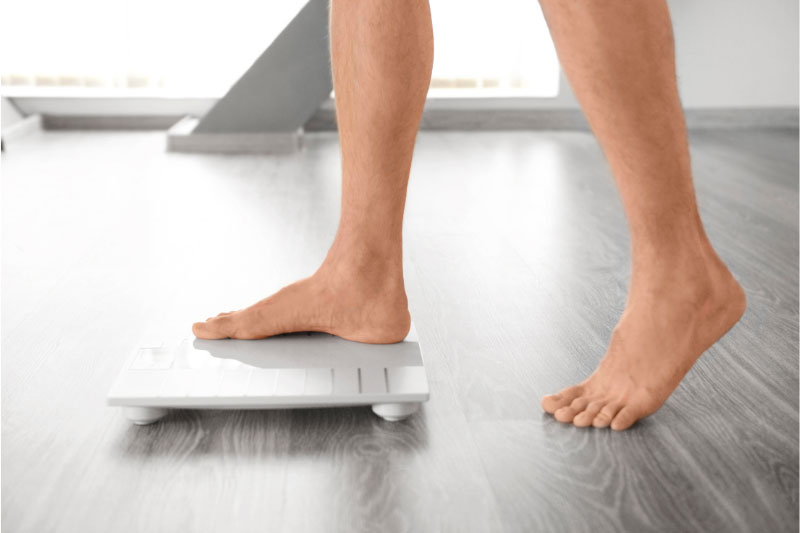
Remember that the best indicator to determine if you need to diet is your natural weight, which is the weight at which you feel good. It's essential to consider your overall well-being, your energy level, your health status, and your personal goals.
If you're considering starting a diet, it's recommended to consult a healthcare professional, such as a nutritionist or dietitian, who can help you develop a meal plan adapted to your needs and lifestyle. They can take into account your BMI and other relevant factors to help you achieve your goals in a healthy and permanent way.
Calculate my BMI before starting a diet
How to calculate my BMI to evaluate if I should go on a diet?
The Body Mass Index (BMI) calculation is simple: divide your weight (in kilos) by your height squared (in meters). This index gives you an estimate of your body build and determines if you are in a weight range considered normal, overweight, or obese.
Let's take a concrete example: suppose you are 1.70 meters tall and weigh 70 kg. You can calculate your BMI by dividing your weight (70) by your height squared (1.7 x 1.7). Thus, the calculation would be: 70 / (1.7 x 1.7) = 24.22. According to this index, you have a normal body build.
If your BMI is between 18.5 and 24.9, this generally indicates a body build considered normal. However, it's important to remember that BMI is a global indicator and does not take into account body fat distribution or body composition. Therefore, there may be individual variations and exceptions to consider.
If your BMI is outside the normal range, either overweight or obese, you might consider going on a diet. However, it is always recommended to consult a health professional, such as a nutritionist or dietitian, to get personalized advice adapted to your situation. They can help you develop a balanced meal plan and adopt healthy lifestyle habits to reach your target weight in a permanent way.
What is my ideal weight and when should I start a diet?
When assessing your ideal weight, it's common to refer to the Body Mass Index (BMI). Here are some indications based on your BMI and recommendations associated with each category. Using this indicator, you can determine if you need to go on a diet to lose weight:
If your BMI is in this range, it means you are underweight in relation to your height. In this case, it is recommended to gain weight to restore a balanced diet and promote your overall well-being. It is advisable to seek the opinion of a doctor or health professional for advice specific to your situation.
If your BMI falls within this range, you are considered to have a weight in the ideal average. This means that you don't need to follow a strict diet, but rather maintain your current weight by adopting a balanced diet and continuing good eating habits. To help you in this process, you can consider incorporating Cétofine 21 high-protein products.
If your BMI exceeds 25, this indicates excess weight in relation to your height. It is then advisable to consider a diet to lose weight and regain a figure in which you feel good. The Cétofine 21 high-protein diet can help you achieve your weight loss goals in a simple, quick and permanent way, provided you follow all the steps of the program.
If you want to maintain your ideal weight: Our high-protein products are very low in calories and are ideal alternatives to the overly fatty and sugary products found in stores. Thus, you can consume our high-protein products as snacks or our high-protein sachets for your meals as prevention or following an excess.
If you want to lose weight: Remember that dieting is not just about losing weight, but also about adopting a healthy and balanced lifestyle in the long term. We have redesigned our diet program to include transition and stabilization stages. These stages allow you to develop new, healthier and more balanced eating habits. By continuing to practice these good habits, you will avoid the yo-yo effect too often encountered after diets. This way, you will maintain your ideal weight. Our Cétofine 21 advisors can support you throughout your weight loss journey if you wish to follow a high-protein diet.
If you would like to learn more about the high-protein diet, we invite you to read our article "everything you need to know about the high-protein diet".
To summarize the interpretation of BMI (Body Mass Index):
- Below 16 = Anorexia or malnutrition
- Between 16.5 and 18.5 = Underweight
- Between 18.5 and 25 = Normal body weight
- Above 25 = Overweight
- Above 30 = Obesity
- Above 40 = Morbid or massive obesity
Should I rely solely on BMI before starting a diet?
Remember that BMI is simply a number and should not be considered as the sole determining criterion before deciding whether or not to go on a diet. It is important to take into account other factors that can influence your overall health and well-being.
For example, body fat distribution, body composition, level of physical activity, medical history, eating habits, and personal goals are all elements to consider when making a decision about a diet.
Some people may have a BMI above the range considered normal, but have good overall health and physical condition. Others may have a BMI in the normal range, but have health problems related to poor diet or lack of exercise.
It is therefore essential to consult a health professional, such as a doctor, nutritionist, or dietitian, who can assess your situation holistically, taking into account all these factors, in order to provide you with personalized recommendations tailored to your specific needs.
Focusing solely on BMI can lead to a simplified view of health and weight management. The main goal should be to adopt a healthy lifestyle, including a balanced diet, regular physical activity, stress management, and good sleep, to promote your long-term well-being, regardless of your BMI number.

The high-protein diet is an effective diet that can allow you not only to lose weight quickly but also to develop good habits. By developing good habits, you will learn to eat a balanced diet and compose your meals in a way that keeps you healthy. The high-protein diet allows you to lose weight only on your fat mass. Indeed, proteins help protect your muscle mass and prevent you from feeling hungry or tired during the diet. This diet allows you to lose your excess weight while protecting you from certain harmful effects of diets.
We sincerely hope that this article has provided you with the necessary knowledge to understand what Body Mass Index (BMI) is and how to interpret it correctly before starting a diet. BMI is a widely used tool to assess a person's body size and to determine whether they fall within a weight range considered normal, underweight, overweight, or obese.
Don't forget that each person is unique, and it's important to make diet and lifestyle decisions in accordance with your specific needs. Our Cétofine 21 advisors are here to support you in your weight loss journey.
If you have any other questions about the high-protein diet or would like support during your weight loss journey, please don't hesitate to contact our customer service at 05 79 87 01 40.
 How to cook tofu: tips and tasty recipes
 What diet menu to effectively lose 10 kilos?
 Succeeding at weight loss with a sugar-free week