 En
En
 Français
 Español
 Italiano








Konjac, a true slimming ally in the high-protein diet
Konjac, a plant with slimming properties that everyone is talking about right now... Does it help you lose excess weight? Find out what it's all about and if you can consume konjac during your high-protein diet to lose weight!
What is konjac?
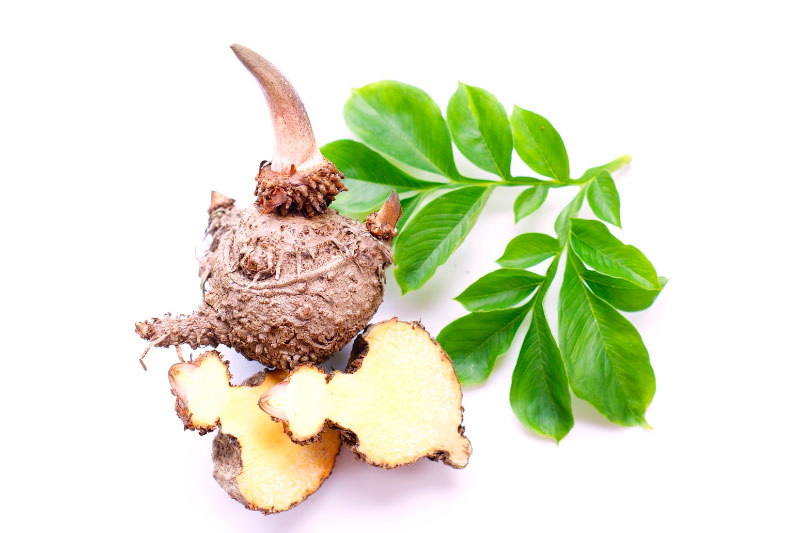
Konjac is a plant from Asia, very common in tropical forests in Japan, Vietnam, and South Korea. Initially used for its medicinal qualities, konjac is recognized as a phytotherapy medicine, a treatment based on plant extracts and natural active ingredients. Today, konjac is becoming more mainstream as a vegetable and is increasingly consumed by Westerners.
Thanks to its high content of soluble fiber, konjac is known for its beneficial properties on digestive health. It is also known for its low calorie content, making it a food of choice for people following a diet or wanting to lose weight.
Konjac is appreciated for its unique texture and its satiating power. It is often used as a food substitute in certain dishes, such as konjac noodles, pasta, or konjac rice. These konjac-based alternatives allow for reducing carbohydrate and calorie consumption while providing a feeling of satiety, making it a valuable ally in the high-protein diet.
Due to its properties and growing popularity, konjac is now easily accessible in many natural food stores and supermarkets. It is available in various forms, such as noodles, flakes, capsules, or dietary supplements.
Konjac has gained popularity as a vegetable in the West due to its nutritional qualities and health benefits. Whether used as a food substitute or incorporated into various dishes, konjac offers a healthy and versatile option for those seeking to adopt a balanced diet and take care of their well-being.
Konjac and the protein diet: we say yes!
As you may have read below, konjac is a food appreciated for its health benefits as well as its nutritional qualities. Its consumption is perfectly suited during a high-protein diet. We explain why.
Can I consume konjac during my high-protein diet to lose weight?
To put it very short: yes!
And at Cétofine, we invite you to discover our Konjac Spaghetti, Konjac Fettuccine as well as Konjac Rice.
Konjac is unlimited during all phases of the high-protein diet. It can be consumed at all stages of the slimming diet especially thanks to its nutritional composition: low in carbohydrates, no fat, low in calories... You will have understood, it is irreproachable on all points and can help you lose weight.
Additionally, by incorporating konjac into your diet, you can feel fuller for longer, which makes it easier to control hunger and can help you avoid cravings and overeating.
In summary, konjac is an ideal ally for a high-protein diet. Thanks to its advantageous nutritional composition, its ability to promote satiety and its low calorie content, konjac can help you achieve your weight loss goals while following a high-protein diet. Don't hesitate to incorporate konjac into your diet to enjoy its many benefits in the context of a slimming diet.
Useful during a weight loss diet: konjac has an appetite-suppressing effect
Like proteins, konjac has a natural appetite-suppressing effect.
Konjac derives this effect from its glucomannan content: it's a natural gelling substance that, once ingested, will quickly produce a feeling of satiety.
Konjac will therefore be your ally during your high-protein diet and will prevent you from craving food during the day and even after your high-protein diet. Specifically, in addition to the natural feeling of satiety provided by the ketogenesis of your protein-rich diet, konjac will give you an even stronger appetite-suppressing effect.
To lose weight quickly, you can follow our high-protein diet based on protein-rich meal replacements and you can consume konjac in parallel. This will allow you to limit the grams of carbohydrates during your diet and will be beneficial for weight loss.
Is the nutritional composition of konjac compatible with the high-protein diet?
Konjac has nutritional values that are perfectly suited to the high-protein diet. Although all konjac compositions differ, the average nutritional values are very good.
Like all vegetables, nutritional values are not exactly equal depending on several factors (environment [place of production, fertilizers used, sunlight, soil…], peeling, processing, storage…) but it is possible to define average values.
When you follow a high-protein diet, you will primarily consume high-protein sachets that you will need to accompany with authorized vegetables. To define which vegetables are suitable for the different stages of the weight loss program, we use the Aprifel website as a reference. For more information on vegetables allowed during the protein diet, consult this article.
The protein content in konjac is low. However, combined with the high-protein diet, you will have the amount of protein necessary to enable weight loss without losing muscle mass.
What is the nutritional composition of konjac?
| Per 100g of konjac | |
| Energy Kcal Energy kJ |
Between 0 and 3kcal 40kJ |
| Proteins | 0.1g |
| Carbohydrates | 2.3g |
| Fats | 0g |
| Fiber | 2.2g |
As we can observe, konjac is a low-calorie, low in fat, low in sugar... In short, it can help you control your calorie intake and help you lose those extra pounds.
Konjac during the high-protein diet: which forms can I consume?
Konjac in paste or block form (konnyaku)
Konjac can be presented in the form of cubes. Composed of konjac root flour and limewater, the mixture is cooked in boiling water then cooled to obtain konjac cubes in the form of solid jelly. Available in 2 versions (white or brown), the only difference is the presence of seaweed in brown konnyaku. It is obtained after mixing the seaweed with white konnyaku.
We offer you two Konjac pasta recipes. They contain a little oat to improve the texture of the pasta. They contain 10 calories and less than 1g of carbohydrates per 100 grams.
We invite you to discover our Konjac pasta: Konjac Spaghetti and Konjac Fettuccine.
Konjac in vermicelli form (shirataki)
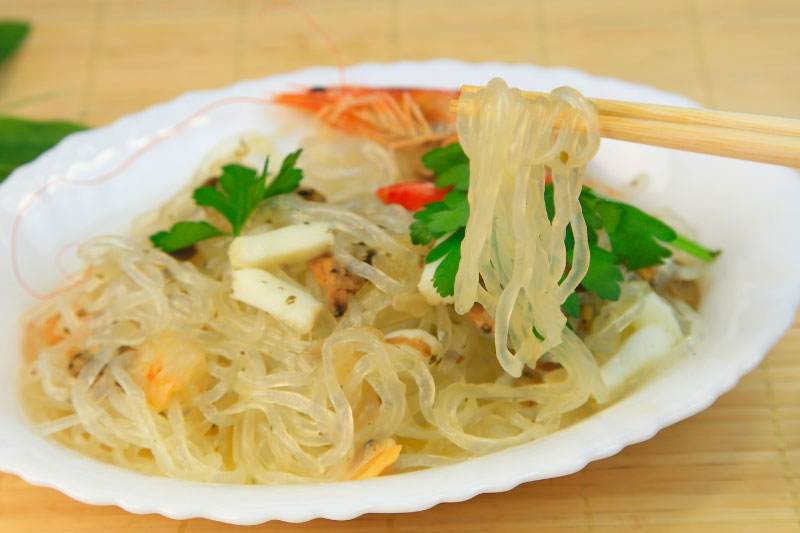
Konjac can be consumed in the form of "pasta". With the appearance of Chinese noodles, konjac vermicelli is ready in 10 minutes with traditional cooking in boiling water. Many recipes are available online to accompany shirataki. It can be prepared in broth (with sliced beef fillet and soy sauce) or mixed with zucchini and pesto.
In rice form (gohan)
Konjac can be declined in the form of rice to be cooked in the same way as vermicelli.
The composition remains identical and only the form is modified, but this opens up new recipe ideas such as konjac rice salad for example.
We offer you a recipe for Konjac rice. This recipe contains a little oat to improve the texture of the rice. Konjac rice contains 10 calories and less than 1g of carbohydrates per 100 grams.
Konjac in capsules
Konjac can be found in capsule or powder form to be consumed once or twice a day. The capsule is to be swallowed in the classic way like Gerimax, while the powder is to be diluted in water like high-protein sachets. This dietary supplement should be consumed about 1 hour before meals to allow the glucomannan to provide an effective appetite-suppressing effect. Please note that dietary supplements cannot replace a balanced diet; they will simply serve as a slimming aid for your metabolism and provide you with the vitamins you need.
Konjac gum
In powder form, konjac gum is mainly used as a thickener in cooking. Thanks to its impeccable nutritional values, cooks often use it to make light or low-fat dessert creams creamy. This allows them to prepare diet-friendly and low-calorie dessert creams.
The high-protein diet in a few words
Following a high-protein diet coupled with a low calorie intake makes the high-protein diet a low-calorie diet. This type of diet should therefore be followed with the help of protein sachets to avoid consuming foods high in fat or carbohydrates.
During the protein diet, you achieve rapid weight loss while getting the vitamins, minerals, and essential amino acids you need. Thanks to high biological value proteins, the feeling of hunger disappears and weight loss is quickly visible on your silhouette.
Konjac is a food that will help you avoid fatty acids during your weight loss diet. You can also consume konjac after your diet to maintain your weight and a good nutritional balance. Stabilizing your ideal weight will be an important element in the success of your slimming diet, and konjac can help you achieve this.
If you have any other questions about the high-protein diet or if you would like support during your weight loss journey, don't hesitate to contact our customer service at 05 79 87 01 40.
 Jump rope to lose weight: the effective method
 List of plant proteins: the best slimming sources
 Succeeding at weight loss with a sugar-free week