 En
En
 Français
 Español
 Italiano











Smoking cessation and weight gain: say no!
Do you want to quit smoking and minimize weight gain as much as possible? Or have you already quit smoking a while ago and want to lose a few extra pounds? In this article, we explain why quitting tobacco promotes weight gain and how to deal with it. Discover our advice and solutions to say no to weight gain after quitting smoking.
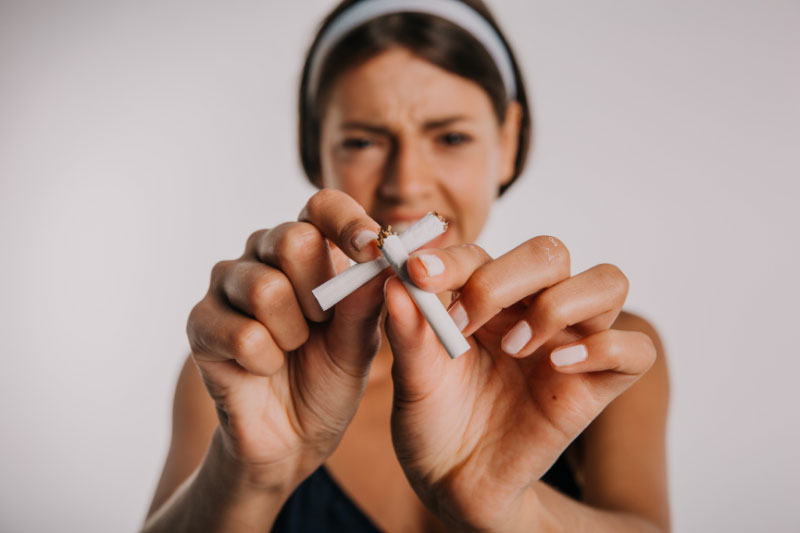
Why does quitting smoking lead to weight gain?
Quitting smoking can lead to weight gain due to several factors, including changes in metabolism, increased appetite, alterations in taste and smell, and hormonal changes. Tobacco also suppresses appetite, and without this suppression, former smokers may feel hungry more often. Let's detail point by point why weight gain is inevitable when quitting smoking.
The link between smoking and metabolism
When you quit smoking, your metabolism changes:
When we stop smoking, our body resumes normal functioning and reaches a weight that would be the one we would have if we had never smoked.
Tobacco causes more energy expenditure, about 6% more at rest and 12% more during physical activities. This is due to a gene called AZGP1 that produces more fat-burning proteins in smokers.
Thus, tobacco smoke changes the way our body uses energy. When smoking, our body spends about 10% more energy each day, which is equivalent to an increase in our basal metabolism of 200 to 300 calories per day. So, if we eat and move as much as before after quitting smoking, we observe weight gain. A smoker weighs about 1.5 to 2 kg less than a non-smoker.
In summary, smokers burn more calories, even simply by smoking. Moreover, cigarettes have a little-known effect: they slow down fat storage in our body.
Goodbye cigarettes, hello pounds: The causes of weight gain
When quitting smoking, some people compensate for the urge to smoke by snacking. But why?
- Nicotine affects the brain's neurotransmitters, some of which are linked to appetite and our attraction to sweet foods. Thus, when we stop smoking, it can lead to an increase in appetite and desire for sweet foods.
- Tobacco acts as an emotion regulator, just like food. When you quit smoking, food can become a way to compensate for this emotional regulation previously provided by cigarettes. This can lead to snacking, especially on foods high in sugar and fat.
- The need to keep hands busy and distract oneself: Some may snack more often to replace the habit of holding a cigarette and distract themselves from the need to smoke.
Other people will feel a greater desire and pleasure in eating. Here's why:
-
The senses are enhanced: Food tastes and smells better after quitting smoking, because cigarette smoke no longer interferes with our senses.
-
Your brain may confuse nicotine and hunger: Sometimes, the body can misinterpret the craving for nicotine and associate it with a feeling of hunger, thus encouraging eating more to replace the urge to smoke. One compulsive desire is replaced by another.
Moreover, smokers whose taste and smell are altered by cigarettes often tend to consume more sauces and salt. When they quit smoking, it's important to relearn how to eat differently, by adopting a balanced diet, even if this change can be difficult for many.
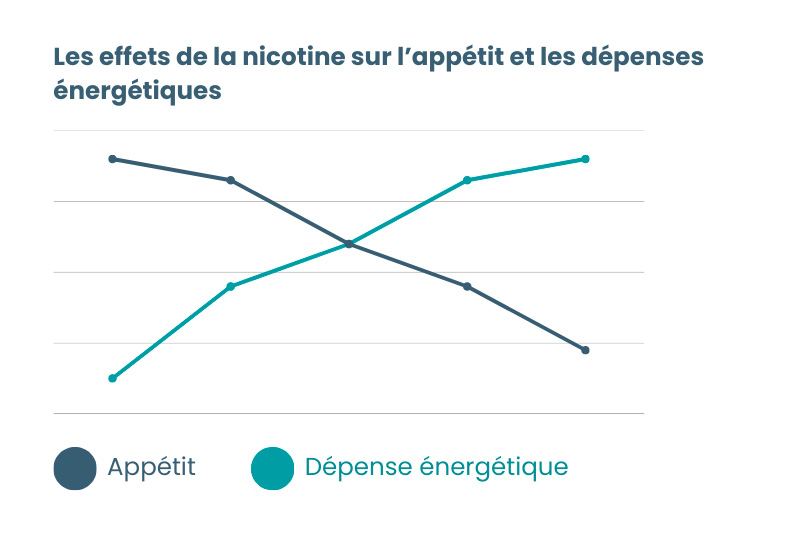
To summarize, here's a diagram showing you the effects of nicotine on appetite and energy expenditure. Nicotine decreases appetite and increases energy expenditure, and therefore, quitting this substance will have the opposite effect: increasing appetite and lowering energy expenditure, which explains the weight gain.
In any case, weight gain is almost inevitable for most former smokers. It is concentrated in the first 3 months following smoking cessation. So here are our tips to minimize weight gain after quitting smoking.
How to limit weight gain after quitting smoking?
Don't place too much importance on the possibility of gaining a few pounds, and focus on the many benefits that quitting smoking brings to your physical and mental well-being.
At Cétofine 21, expert in medical dietetics, we want to give you our best advice to limit this weight gain without neglecting your well-being.
The quest for balance: how to manage cravings after quitting smoking?
After quitting smoking, it's normal to sometimes feel cravings to eat more often. However, be careful not to eat too much fat or sugar to avoid weight gain. Here are some tips to better manage this:
-
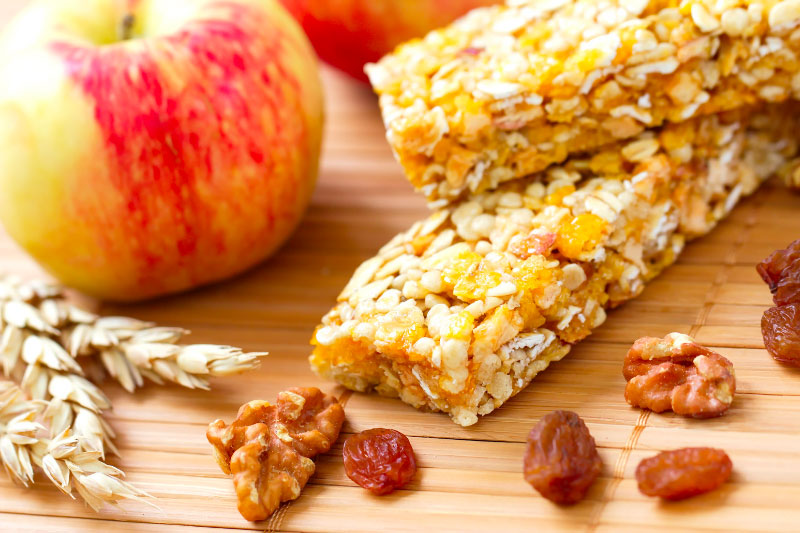
Choose healthy snacks: Opt for small snacks like fruits, vegetables, or nuts. For example, an apple or a banana can be good options. You can also consume healthy, low-calorie snacks like our high-protein bars. These are low-calorie and healthy recipes, with chocolate, fruit, or cereal flavors.
-
Eat at regular times: Try to have your meals at consistent times throughout the day. This can help prevent sudden food cravings. Each meal should be spaced 4 hours apart, which is the time your metabolism takes to assimilate your last meal. If you're hungry before these 4 hours, it means you haven't eaten enough or your plate wasn't balanced enough. If you're hungry after these 4 hours, it means you've eaten too much or your plate was too rich in fat. Between these meals, don't hesitate to consume healthy snacks.
-
Drink plenty of water: Drinking enough water can help you feel full and reduce the urge to snack between meals. When the urge to snack hits you, it's a compulsive craving. On average, a compulsive craving lasts between 3 and 4 minutes. So drink a large glass of water, take a breath of fresh air, and think about something else!
-
Practice mindfulness: Take the time to eat mindfully, being aware of each bite. This can help you recognize if you're truly hungry or if it's just a passing craving.
In conclusion, to avoid weight gain when quitting smoking, it's important to choose healthy snacks, eat at regular times, and drink plenty of water.
Nourishing your body without cigarettes: what to eat to avoid weight gain after quitting smoking?
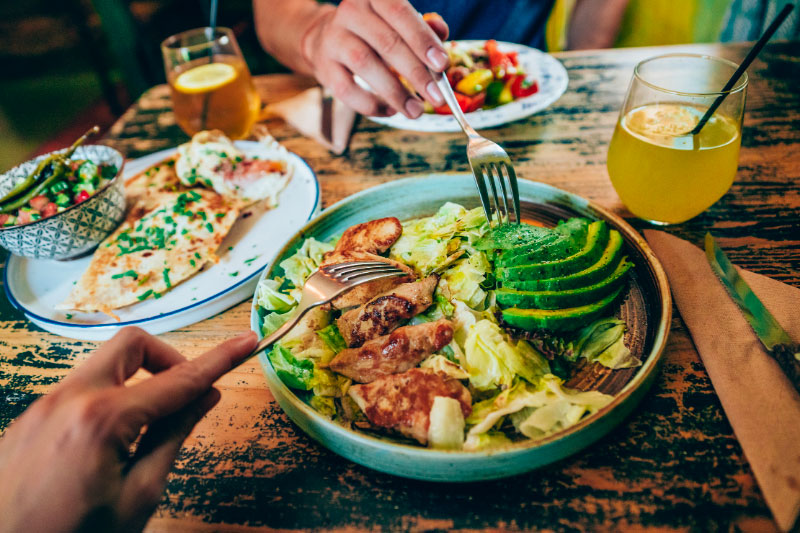
After quitting smoking, it's important to choose your foods wisely to take care of your body. Here's how:
-
Eat plenty of fruits and vegetables: Try to include a variety of fruits and vegetables in your meals. Vary your fruit choices, discover heirloom vegetables: make an effort not to always buy the same ones
-
Prioritize whole foods: Opt for whole grains like whole wheat bread or brown rice. These foods are healthier and provide you with quality carbohydrates.
-
Choose lean proteins: Prefer lean protein sources such as chicken or fish. You can also consume legumes. These proteins are good for building your muscles.
-
Limit sugar, alcohol, and saturated fats: Exchange chocolate bars high in fat and sugar for dark chocolate, fresh fruit, or a slice of whole wheat bread. Choose a lighter dairy product, such as yogurt or quark without added sugar, instead of dessert creams that are often high in fat and sugar. If you love sodas or syrups, opt for "light" or reduced-calorie versions to avoid excess hidden sugars. Reduce or eliminate adding sugar to your coffee or tea for a healthier choice.
Don't forget to choose foods that suit your needs and desires, pleasure is essential! Listen to your cravings and don't deprive yourself too much. Find the balance between pleasure and physical health.u00A0
The importance of physical activity in post-smoking weight loss
Exercise is very important when you quit smoking. It can help you lose weight and feel better. Here's how:
-
Do cardiovascular exercises that make your heart beat faster, such as brisk walking, cycling or swimming. This helps you burn calories. Strength training is also important. It boosts your metabolism.
-
Move every day, even if it's just for a short period. You can take a walk after dinner or dance in your living room with your children, meet up with friends and go for a stroll together.
-
Find physical activities that you enjoy, as this will encourage you to do them regularly. For example, if you like dancing, join a dance class.
These simple tips can help you manage your diet and physical activity well after quitting smoking. The key is to take care of your body and feel good about yourself.
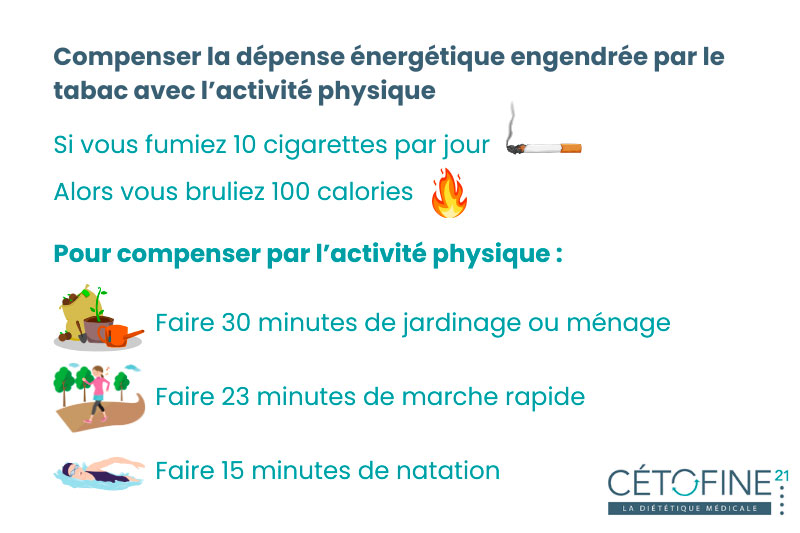
Compensate for the energy expenditure caused by smoking with physical activity
- You used to smoke 10 cigarettes a day?
100 calories to burn: 30 min of housework or gardening, 23 min of brisk walking, 15 min of swimming, 10 min of jogging - You used to smoke 15 cigarettes a day?
150 calories to burn: 45 min of housework or gardening, 34 min of brisk walking, 22 min of swimming, 15 min of jogging - You used to smoke 20 cigarettes a day?
200 calories to burn: 1h of housework or gardening, 45 min of brisk walking, 30 min of swimming, 20 min of jogging
How to lose weight after quitting smoking?
Despite all your efforts to adopt a healthier lifestyle, eat better, practice regular physical activity... You can't seem to lose those few extra kilos?
Discover the high-protein diet and more broadly the high-protein products Cétofine 21, whether meal replacements or supplements.
Following a high-protein diet to lose weight after quitting smoking
For many people, weight gain can be discouraging, but there are solutions to regain a balanced weight and better health after quitting smoking, such as a high-protein diet.
This diet focuses on increasing protein intake while limiting carbohydrates and fats. Here's how this diet can be beneficial in the context of quitting smoking:
-
The high-protein diet promotes muscle mass maintenance: One of the key advantages of a high-protein diet is its potential to maintain and promote muscle mass. When quitting smoking, the body undergoes metabolic changes that can lead to muscle mass loss. Proteins are essential for tissue rebuilding and repair, which is particularly important after quitting smoking.
-
Proteins promote satiety: Proteins have a higher satiety effect compared to carbohydrates and fats, which means they can help you feel full for longer. By consuming high-protein products in your diet, you can reduce appetite and potentially control cravings, which is important when trying to lose weight.
-
Protein consumption accelerates metabolism functioning: The process of digesting proteins requires more energy than that of carbohydrates or fats. This means that your body burns more calories to metabolize proteins, thus contributing to increasing your metabolism. A higher metabolism can facilitate weight loss and weight management after quitting smoking.
-
The high-protein diet helps control caloric intake: High-protein products are low in carbohydrates and fats and very rich in proteins. They contain very few calories and provide you with the essential nutrients for proper metabolism functioning. Moreover, it is possible to consume high-protein and low-calorie products occasionally to control your caloric intake.
Lose 3 kilos in 2 weeks with a high-protein diet
As explained previously, a smoker is naturally leaner than a non-smoker. On average, a smoker weighs 2.5 to 3 kilos less than a non-smoker. Assuming that after quitting smoking you have gained 6 kilos, you will need to lose about 3 to return to your ideal weight.
We invite you to discover our slimming kit to lose 3 kilos in just 2 weeks. You will find all the high-protein sachets needed to lose weight quickly as well as advice to guide you towards your weight loss goal. This kit includes our customers' favorite recipes!
We also offer a kit to lose 6 kilos in 1 month and another kit to lose 10 kilos in 1 month and a half.
Reduce calorie intake by consuming high-protein snacks
When aiming to maintain or lose weight, it is important to control your calorie intake. However, this does not mean we must give up all our treats. High-protein snacks, such as protein bars or protein biscuits specially formulated by us, offer a delicious snack option while maintaining a low calorie content.
These protein bars or biscuits are both delicious and low in calories. These high-protein snacks allow us to satisfy our sweet cravings without too many calories. This means we can treat ourselves without worrying about consuming too many calories when trying to lose weight.
High-protein snacks prove to be excellent substitutes for our usual snacks. Replacing a standard chocolate bar with a high-protein bar can help significantly reduce calorie intake while promoting weight loss after quitting smoking.
In conclusion, the journey towards a tobacco-free life is a radical change for your body and mind. Quitting smoking can impact your appetite, eating habits, and metabolism. However, by adopting a balanced approach and incorporating simple adjustments into your daily life, you can minimize the effects on your weight. For effective and rapid weight loss, try the high-protein diet. Don't hesitate to combine these new eating habits with the consumption of high-protein snacks, which are very low in calories.
All the cards are in your hands to say no to weight gain following smoking cessation!
If you have other questions about the high-protein diet or would like support during your weight loss journey, don't hesitate to contact our customer service at 05 79 87 01 40.
 How to cook tofu: tips and tasty recipes
 What diet menu to effectively lose 10 kilos?
 Succeeding at weight loss with a sugar-free week