 En
En
 Français
 Español
 Italiano












15 foods to help you lose belly fat effectively
In short : no food specifically melts away belly fat. To slim your waist, you need an overall calorie deficit. Certain foods help you achieve it and reduce bloating: high-biological-value proteins (lean fish, Greek yogurt), fiber (apples, artichokes, asparagus, legumes, quinoa), potassium (bananas, mangoes), and sugar-free drinks (water, green tea).
A belly that stays bloated despite your efforts can be discouraging, especially as metabolism slows with age. The good news: what you eat can help.
Here are 15 foods to help you lose belly fat, reduce bloating, and maintain a healthy weight over time.
15 foods to prioritize:
- Apples
- Artichokes
- Asparagus
- Greek yogurt
- Lean fish
- Quinoa
- Green tea
- Almonds
- Walnuts
- Legumes
- Ginger
- Pineapple
- Bananas
- Mangoes
- Water
Belly fat or bloating: two different approaches
Lose fat and reduce bloating
A rounded belly can have two causes:
- Abdominal fat, found beneath the skin and around the organs (visceral fat). It decreases only with a calorie deficit.
- Bloating, caused by gas, slow bowel movements, or water retention. It goes away within hours or days.
Fiber promotes regular bowel movements. Potassium limits water retention. Together, they can help your belly feel lighter quickly.
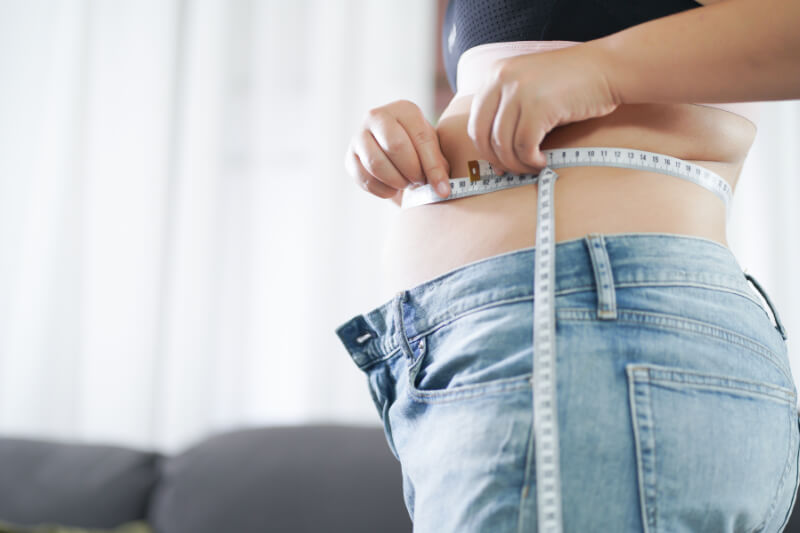
Why you can’t target belly fat
Your body draws on its fat stores throughout the body. No food specifically “burns” belly fat. Be wary of promises that claim otherwise.
A calorie deficit remains the only way to reduce your waist size for good. The foods below help you maintain one without feeling hungry.
15 foods to help you lose belly fat
1. Apples to help regulate your appetite
Apples contain pectin, a soluble fiber. When it comes into contact with water, it forms a gel in the stomach. The result:
- you feel full longer;
- the urge to snack decreases;
- blood sugar rises more slowly.
Eat it with the skin on: that’s where much of its fiber is concentrated.
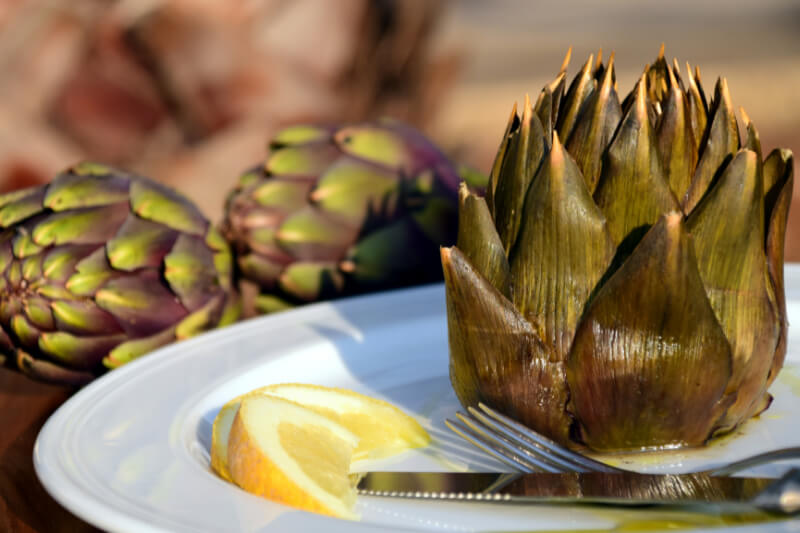
2. Artichokes to support digestion
Artichokes contain cynarin. It stimulates bile production and helps digest fats. Rich in potassium, artichokes also help eliminate excess water.
Opt for steaming. It preserves their nutrients without adding fat.
Good to know : artichokes are rich in inulin, a fermentable fiber. For people with sensitive digestion, it can cause gas. Start with small portions.
3. Asparagus for regular bowel movements
Asparagus provides fiber that promotes regular bowel movements and helps prevent constipation. Sluggish bowels are a common cause of bloating.
It also contains asparagine and potassium, two compounds with a mild diuretic effect. At around 25 kcal per 100 g, it’s one of the lowest-calorie vegetables.
4. Greek yogurt for balanced gut flora
Yogurt contains live cultures that nourish your gut microbiome. Balanced gut flora can help reduce some bloating.
Strained Greek yogurt has about twice as much protein as regular plain yogurt. This protein helps you feel full.
Check the label: many “Greek-style” yogurts sold in France simply have cream added. They contain more fat but little extra protein. Choose strained Greek yogurt with 0% or 2% fat.
5. Lean fish to preserve your muscles
When you lose weight, your body may draw on your muscles for energy. Getting enough protein helps limit this loss of muscle mass.
Lean fish are ideal:
- cod;
- sole;
- pollock;
- whiting.
They provide all the essential amino acids while containing less than 1–2 g of fat per 100 g. Perfect for a light dinner: see our tips for choosing fish for dinner.
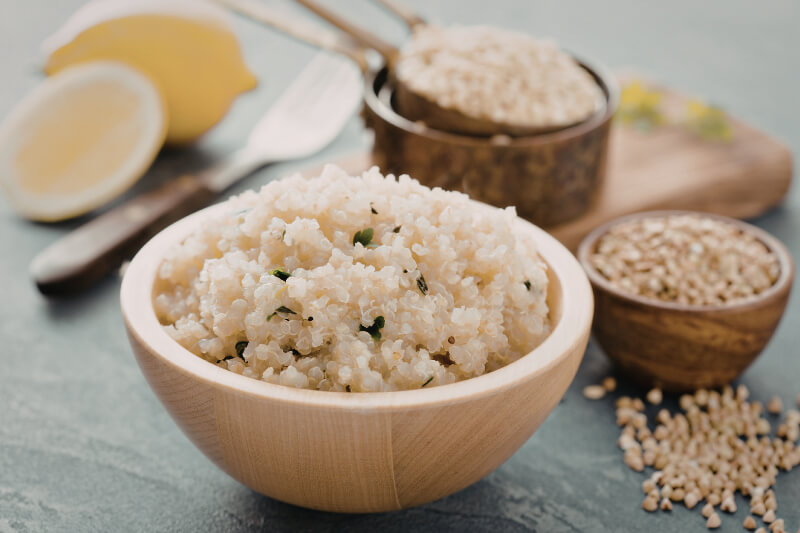
6. Quinoa to stabilize your blood sugar
Quinoa is a pseudocereal with a moderate glycemic index. It raises blood sugar less than white rice, so you won’t feel hungry again as quickly.
Another benefit: its protein contains all nine essential amino acids, which is rare among plant foods.
Replace white rice with quinoa a few times a week. It’s a simple way to better manage your weight.
7. Green tea for its diuretic effect
Green tea contains catechins and caffeine. They slightly increase your energy expenditure. Its diuretic effect helps eliminate excess water.
- Drink up to three cups a day.
- No added sugar.
- Avoid it late in the day if caffeine disrupts your sleep.
Its effect on weight loss remains modest. Green tea complements a balanced diet; it doesn’t replace one.
8 and 9. Almonds and walnuts for between-meal hunger
For between-meal cravings, nuts and seeds beat processed snacks. They provide:
- healthy fatty acids (omega-9 in almonds, omega-3 in walnuts);
- filling fiber and protein;
- magnesium, which helps combat fatigue.
They are still very high in calories. Limit yourself to 30 g a day, or a small handful.
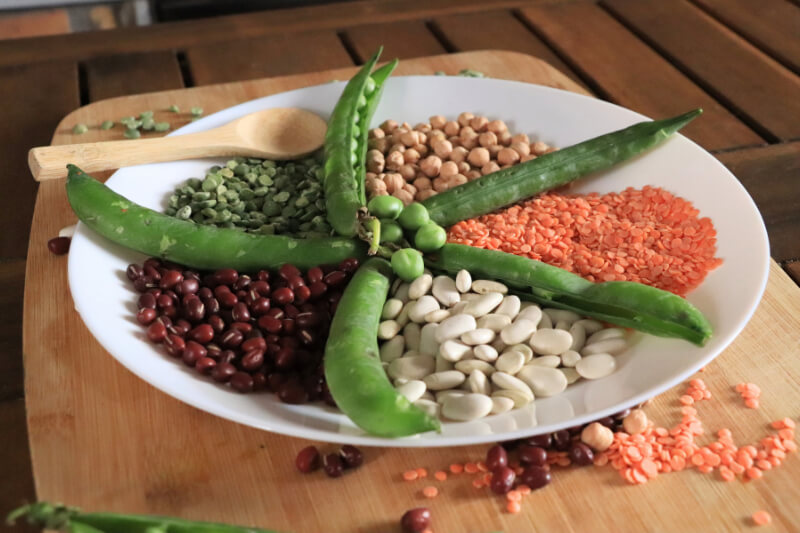
10. Legumes for lasting fullness
Legumes combine fiber and plant-based protein. They slow digestion and keep you full longer. The best options are:
- green lentils;
- chickpeas;
- kidney beans;
- fava beans.
To avoid gas: introduce them gradually, soak dried legumes, and rinse canned ones. Their fermentable fiber can cause bloating at first.
11. Ginger for digestive comfort
Ginger speeds up stomach emptying. It reduces feelings of heaviness after meals.
Use it fresh, steep it for tea, or grate it over your food. A simple tip for a lighter-feeling stomach.
12. Pineapple for bloating
Pineapple contains bromelain, an enzyme that helps break down proteins. It makes large meals easier to digest.
Two things to note:
- Bromelain is concentrated mainly in the stem and core of the fruit. Don’t throw away the core.
- Eat fresh pineapple. In canned pineapple, heat destroys the enzyme, and the syrup adds sugar.
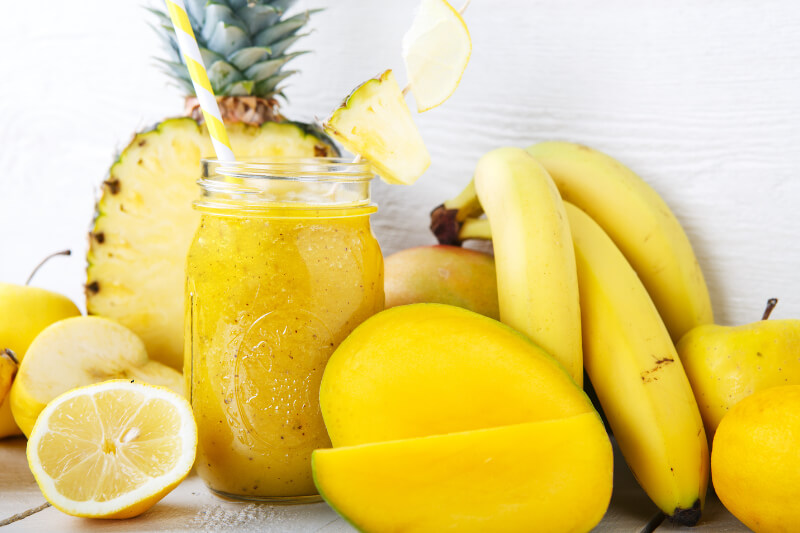
13 and 14. Bananas and mangoes for potassium
These sweeter fruits have a place in your diet thanks to their potassium content. Potassium balances sodium and regulates water in the body, helping limit water retention.
- Bananas provide fiber that supports regular bowel movements. Choose ripe ones: when green, they tend to slow digestion.
- Mangoes provide soluble fiber that is gentle on digestion.
Enjoy them at breakfast or as a snack, in reasonable portions.
15. Water to support your kidneys
Water is essential for your entire metabolism. Drink at least 1.5 liters a day. This helps your kidneys eliminate waste products such as urea.
A large glass of water before a meal also reduces feelings of hunger. It’s the simplest way to support your weight loss.
When can you eat these foods on a high-protein diet?
These foods can be part of a balanced diet. On a high-protein diet, however, they aren’t all introduced at the same time.
- Stages 1 and 2 (Protein Diet and Modified Protein Diet): carbohydrate intake is greatly reduced to put your body into ketosis. It then draws on its fat stores. Green vegetables and lean proteins are central to these stages.
- Stages 3 and 4 (Transition and Stabilization): fruits, starchy foods such as quinoa, legumes, nuts and seeds are gradually reintroduced.
To find out which foods are allowed at each stage, read our article on foods allowed during a high-protein diet.
Lose belly fat for good with the Cétofine 21 method
These foods help. A structured method delivers faster and, above all, lasting results.
4 stages to lose weight without the yo-yo effect
The Cétofine 21 program follows 4 progressive stages:
- Protein Diet: rapid weight loss focused on body fat.
- Modified Protein Diet: weight loss continues with more variety.
- Transition: gradual reintroduction of foods.
- Stabilization: a return to a balanced diet.
Transition and Stabilization are key. They give your body time to readjust. You keep the weight off and avoid the yo-yo effect. When followed properly, the method is simple and effective.
High-biological-value proteins from France
Our high-protein packets are made primarily with milk protein. It protects your muscle mass throughout the weight-loss phase.
| Criterion | Cétofine 21 proteins |
|---|---|
|
Source |
Predominantly milk protein, with high biological value |
|
Chemical score |
Over 100 |
|
Amino acid profile |
Complete, rich in essential amino acids |
|
Digestibility |
Very good |
|
Manufacturing |
French laboratory, established in 1996 |
| Criterion |
Source |
|---|---|
| Cétofine 21 proteins |
Predominantly milk protein, with high biological value |
| Criterion |
Chemical score |
|---|---|
| Cétofine 21 proteins |
Over 100 |
| Criterion |
Amino acid profile |
|---|---|
| Cétofine 21 proteins |
Complete, rich in essential amino acids |
| Criterion |
Digestibility |
|---|---|
| Cétofine 21 proteins |
Very good |
| Criterion |
Manufacturing |
|---|---|
| Cétofine 21 proteins |
French laboratory, established in 1996 |
Products high in protein and low in carbohydrates and fat: the foundation of a safe weight-loss program. Discover our high-protein products.
Expert support since 1996
Founded in Montpellier in 1996, our laboratory specializes in medically supervised high-protein diets. For more than 20 years, our packets were available only by prescription, with follow-up care from nutrition specialists throughout France.
Today, our method is available online:
- More than 30,000 people supported in reaching their goals;
- A 4.8/5 rating from our customers;
- Nutrition advisors available by phone;
- Ready-to-use Weight-Loss Kits: no more mental load of planning your meals;
- Fast delivery in discreet packaging.
Everyone’s weight-loss journey is unique. The program adapts to your goals and personal history.
Key takeaways
To lose belly fat, focus on a calorie deficit and the right foods:
- quality protein for fullness and your muscles;
- fiber for regular bowel movements;
- potassium to help prevent water retention;
- water and sugar-free drinks.
Start adding them to your meals tomorrow. And if you want fast, lasting results, the Cétofine 21 method guides you step by step toward your ideal weight.


 What is the best natural appetite suppressant for weight loss?
 How can you effectively lose 2 kilos in one week?
 Low-calorie diet: 7-day meal plan and a method for lasting weight loss