 En
En
 Français
 Español
 Italiano









Proteins for elderly people: why, how?
In this article, we will see why it is important for older adults to consume proteins. Cétofine 21 provides you with solutions to consume proteins easily and simply.
The importance of proteins for older adults
What are the benefits of proteins?
Proteins play a crucial role in the health and well-being of older adults, as they help maintain muscle strength, promote proper immune system function, and participate in many other essential physiological processes.
More specifically:
- They play a crucial role in maintaining muscle strength and physical independence by contributing to the structure of muscle tissue.
- They also support the normal functioning of the immune system and protect the body against external aggressors such as viruses, bacteria, fungi, or parasites.
- Moreover, they are involved in many other important physiological processes such as digestion, hormonal regulation, and oxygen transport.
The benefits for an elderly person of consuming protein dietary supplements in the form of high-protein sachets
It is recommended for older people to increase their protein intake, discover why.
Increased protein needs with age
The aging process leads to various physiological changes, including loss of muscle mass. This involves a decrease in strength and physical performance. Thus, to limit muscle loss, it is essential that older people ensure they have an adequate protein intake.
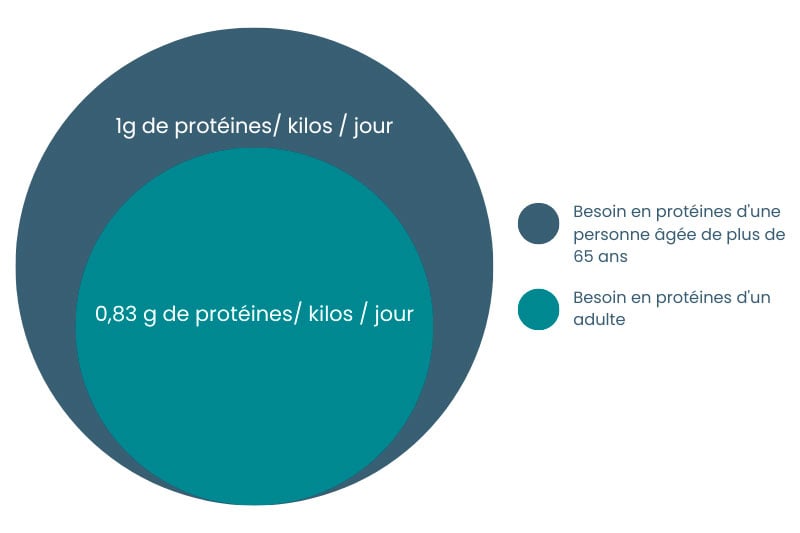
Contrary to preconceived ideas, protein needs for elderly people are higher than those for adults. According to ANSES (National Agency for Food, Environmental and Occupational Health Safety), adults have a nutritional reference for proteins of 0.83 g/kg/day, while for people over 65 years old, it is at least 1 g/kg/day, which represents a 20% increase in needs. Indeed, in order to preserve muscle mass, which tends to degrade with age, proteins for elderly people are essential.
To meet their daily protein needs, a 75-year-old man weighing 70 kilos should consume foods such as an egg, two yogurts, a hamburger steak, and a 100g portion of salmon daily. However, these protein-rich foods are often lacking in seniors' diets for various reasons (price, lack of appetite, difficulty chewing, etc.).
A high-protein sachet contains 18 grams of protein of high biological value, while 100 grams of ground beef contains an average of 25 grams of protein. By supplementing your diet with high-protein sachets, you will provide your body with the expected amount of protein.
High-protein sachets perfectly match the dietary needs of people over 60, both in terms of their ease of use and their price.
Reduction of carbohydrate and lipid intake
As we reach a certain age, health risks multiply, particularly the risks of heart disease or increased cholesterol levels. The intake of fats and carbohydrates must therefore be reduced to mitigate these risks. High-protein sachets contain very little carbohydrates and fats, and should thus help preserve the health of seniors.
Preservation of muscle mass, bones, and joints: feeling healthier
Finally, protein consumption through a protein supplement in elderly people also has benefits for strengthening bones and joints. By preserving the patient's muscle mass, it helps to reduce the risk of fractures and injuries, which can lead to major complications at an advanced age. Thus, a protein supplement can play an important role in preventing these problems.

What happens when an elderly person lacks protein?
As we age, sometimes the body weakens. This is due not only to age, but also to the phenomenon of malnutrition, which is very common among those over 60 (about 23% of people aged 60 to 80 would suffer from malnutrition).
This can lead to many health risks for these individuals, such as decreased immune defenses, loss of autonomy, etc. Deficiencies caused by malnutrition are most often obvious when it comes to proteins. Using high-protein sachets can therefore be extremely effective in maintaining the physical capabilities of seniors.
Nearly 58% of people over 65 are considered fragile or pre-fragile, due to bodily changes associated with aging. These include an increase in fat mass and a decrease in muscle mass. Thus, it is essential to rebalance the nutritional intake of older people by increasing their protein consumption. This is necessary to preserve their quality of life and autonomy.
Cetofine 21 protein-rich products for the elderly
How to adapt the high-protein diet for an elderly person who wants to lose weight
If you are an elderly person and wish to lose weight, we recommend that you are medically supervised or start our high-protein diet with step 2, the mitigated protein diet. This way, you will keep one meal composed of dietary proteins for lunch or dinner.
Here are our other recommendations:
- It is important for seniors to eat at regular intervals. 3 meals and 2 snacks per day are recommended. As part of a high-protein diet, these recommendations should be followed and adapted, incorporating high-protein sachets into meals and snacks.
- It's also important to avoid a too-long overnight fasting period (no more than 12 hours).
- Following a high-protein diet to lose weight is possible for older people, although medical supervision during this stage is strongly advised.
- Continuing the high-protein diet is possible, and in the longer term, high-protein sachets can also be used as dietary supplements to make up for the lack of protein intake.
- Finally, it's important to stay well-hydrated during a protein diet, and this is especially true for an elderly person. You should drink at least 1.5 L of water per day, with 2 L being ideal.
Consuming proteins as dietary supplements
All of our high-protein products can be consumed by elderly people: easy preparation, protein-rich food substitutes, gourmet recipes... All of our high-protein sachets contain the same amount of protein.
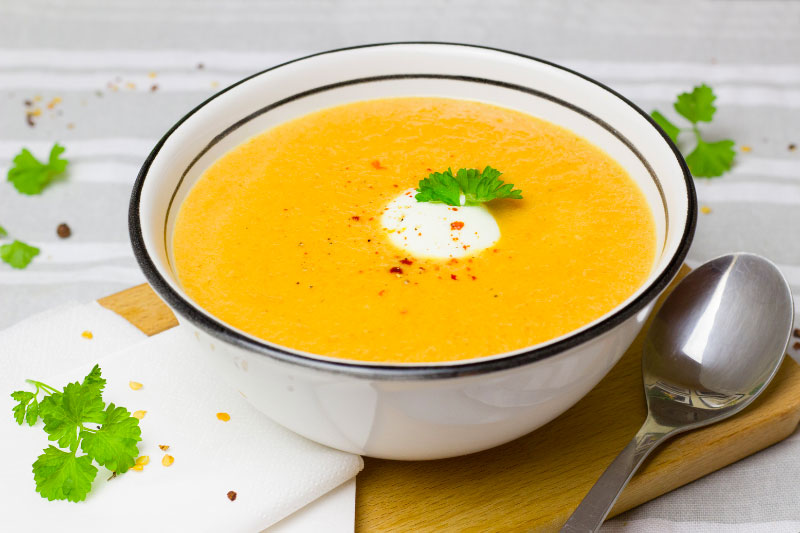
Elderly people can thus replace their usual soup with a high-protein soup or creamy soup. Our recipes are designed to be tasty and varied. Indeed, you will find a wide choice of high-protein soup recipes: vegetables, mushrooms, pumpkin and parmesan, split peas and bacon, leeks and potatoes, poultry, asparagus, …
Elderly people can also increase their protein intake with protein drinks for the elderly. Primarily consumed for weight loss, high-protein drinks can be consumed in addition to a balanced diet to increase protein intake. You will find fruit drinks, cocoa drinks or cappuccino, for example.
To conclude, the high-protein diet is thus ideal for elderly people suffering from malnutrition or significant deterioration of their physical capacities. Its low-carbohydrate characteristics are particularly interesting for the prevention of heart disease. High-protein sachets can, while preserving muscle mass, reduce the risk of fractures. However, care must be taken to follow the instructions of the high-protein diet (eat 5 to 6 times a day, consume vegetables, drink water). Thus, the high-protein cure can bring seniors the vitality and autonomy they lack.
High-protein products can also be consumed as a protein supplement for elderly people. They will thus maintain their daily eating habits while consuming more protein.
If you have any questions about our high-protein products and their use, please don't hesitate to contact our customer service at 05 79 87 01 40.

 How to cook tofu: tips and tasty recipes
 What diet menu to effectively lose 10 kilos?
 Succeeding at weight loss with a sugar-free week