 En
En
 Français
 Español
 Italiano











Weight loss and calorie deficit, how does it work?
In this article, we'll explain how the caloric deficit works for weight loss. You can use this method for modest weight loss, between 1.5 kilos and 3 kilos per month. This method can be used following your high-protein diet, if you want to continue losing a few kilos or to deal with small excesses. It's based on a simple principle: eating balanced, but lower-calorie meals.
On the contrary, the high-protein diet is designed for rapid and more significant weight loss. It involves eliminating certain food groups, particularly carbohydrates. The high-protein diet is carried out on a temporary basis. If you want to learn more about the high-protein diet method, click here.

Calorie deficit: a key to balanced weight loss
Losing weight is a goal for many people, but it's essential to do it in a healthy and balanced way or in a controlled manner. A common approach to achieve this goal is to create a calorie deficit (low weight loss). However, it's important to understand that this doesn't mean depriving yourself of certain foods, but rather managing your calorie intake intelligently to allow your body to burn stored fat.
What is a calorie deficit?
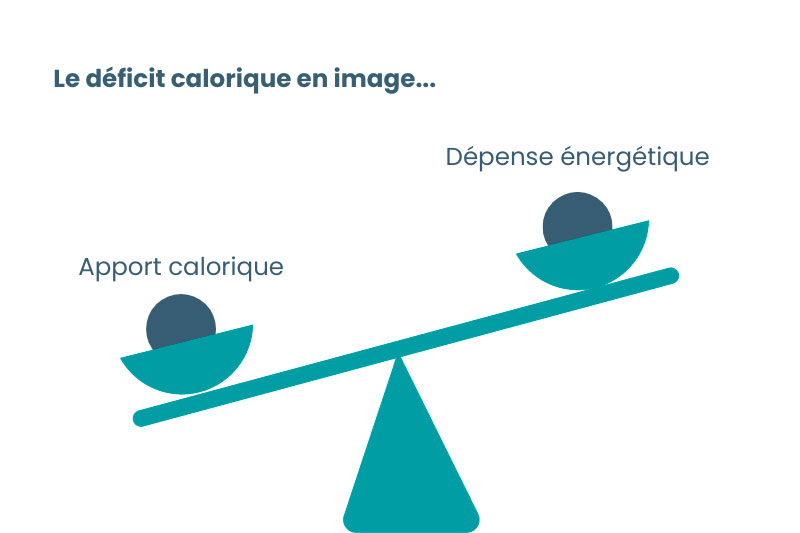
A caloric deficit occurs when you consume fewer calories than your body expends. However, to better understand this concept, it's worth recalling how the body works.
Our body needs energy to function properly and live. This energy comes from our diet, particularly from our carbohydrate intake. Once absorbed, this energy, expressed in terms of calories, is used in a distributed manner: 60% supports the needs of the basal metabolism, 30% fuels muscle contractions related to physical activity, and 10% is dedicated to transforming food into nutrients.
When energy intake exceeds the body's energy needs, excess calories are stored as fat, leading to weight gain. The caloric deficit, on the other hand, consists of maintaining an energy intake lower than energy expenditure, thus promoting weight loss.
In other words, you create a controlled energy imbalance that forces your body to draw on its fat reserves to compensate for the lack of calories. This leads to progressive and permanent weight loss.
A low-calorie diet applies this principle of caloric deficit in a controlled manner to achieve more significant weight loss goals more quickly.
How to lose weight through calorie deficit?
If you naturally burn 2,000 calories per day (averaging 2,500 for men and 1,800 for women), and your daily intake is limited to 1,800 calories, you create a caloric deficit of 200 calories. This method, based on mathematical calculations, is widely used in nutrition to promote weight loss.
To establish a caloric deficit, there are several approaches.
1. Reduce your calorie intake:
The first approach is to consume fewer calories. You can also reduce portion sizes or replace snacks between meals with low-calorie snacks. If you manage to eat less than 2,000 calories while burning 2,000 calories, you create a caloric deficit.
2. Burn more calories:
If you prefer not to change your diet, or at least not reduce the amount of calories consumed, a second option is to increase your caloric expenditure through physical exercise: play sports. Regularly practice a sports activity such as cycling, running, boxing, or intensive strength training!
Finally, you can opt for a combination of both methods, by carefully balancing your caloric needs, your diet, and your level of physical activity.

Our tips for achieving a controlled calorie deficit
Eating a balanced diet is essential
One of the common mistakes when talking about caloric deficit is the belief that you just need to completely eliminate certain food groups to lose weight. In reality, it is crucial to understand which food groups to eliminate and why. Eating in a balanced way means consuming a variety of foods from different categories, including vegetables, fruits, lean proteins, whole grains and sources of healthy fats.
The elimination of certain food groups can be done to lose weight but only in a structured manner. This is the case with the high-protein diet. This method involves eliminating carbohydrates to push your body to draw its energy from your body fat. With this method, you will lose weight quickly, over a defined period. This diet involves a high consumption of protein to ensure a feeling of fullness and protection of muscle mass.
If you would like more information on this subject, we invite you to read our article: "Diet and weight loss: what to eat for a balanced diet?". You will find various tips and examples to adopt a balanced diet!
Why not avoid a food category?
In everyday life, depriving yourself of a food category, such as carbohydrates, fats, or proteins, is rarely a good idea. Each food group provides essential nutrients to your body. For example, carbohydrates provide energy, proteins are necessary for muscle building and tissue repair, and healthy fats are important for cardiovascular health and brain function.
When you eliminate a food group from your diet, you risk missing out on these essential nutrients. This is why this practice should only be done if you are following a supervised diet to lose weight quickly.
However, as part of a high-protein diet, you will eliminate almost all of your carbohydrate intake. This method is medically controlled and approved. Your body will naturally enter a state of ketosis. This is a natural process that allows the production of ketone bodies that will provide energy to your body. You will adopt a very high-protein and low-calorie diet = calorie deficit = weight loss.
The importance of portions and quantity
Instead of depriving yourself of a food category, it is recommended to monitor portions and the quantity of calories you consume. Eating in reasonable quantities is the key. If you wish to reduce your calorie intake to create a deficit, start by reducing portions, avoiding excess sugar, saturated fats, and processed products. This is the secret to a controlled calorie deficit for losing a few pounds while maintaining a balanced diet.
Why consuming high-protein and low-calorie products helps you create a calorie deficit?
The consumption of high-protein and low-calorie products can contribute to weight loss through the creation of a caloric deficit. High-protein products can be used as part of a high-protein diet to lose weight quickly and easily.
High-protein products can also be used as a supplement to your current diet or to replace some of the foods you consume. For example, you can replace your high-calorie snacks with high-protein and low-calorie snacks such as protein cookies or protein bars. All of these recipes are delicious while containing very few calories. You can also discover on our website protein drinks, low-calorie desserts... plenty of low-calorie recipes to reduce your caloric intake in a simple way!

Here's how high-protein products help you create a calorie deficit in your current diet:
1. Calorie reduction: Low-calorie products are designed to contain fewer calories per serving than traditional food products. By choosing foods of this type, you automatically reduce your daily caloric intake.
2. Protein intake: High-protein products have a high protein content. Proteins are essential for maintaining muscle mass and promote satiety, which means you'll feel fuller for longer after consuming protein-rich foods. You'll avoid snacking between meals! Snacking often adds unnecessary calories to our diet.
3. Fat mass reduction: By maintaining a caloric intake lower than your total caloric expenditure, which can be aided by low-calorie products, your body begins to tap into its fat reserves to compensate for the energy deficit. This promotes weight loss, as stored fats are used as an energy source.
When you follow a high-protein diet, you will consume dietary supplements to provide you with all the essential nutrients. Moreover, when you no longer consume carbohydrates, ketone bodies produce energy to ensure the proper functioning of your metabolism. A high protein intake helps protect your muscle mass, and the lack of calories activates rapid weight loss.
The high-protein diet helps you develop new, healthier eating habits, such as eating a balanced diet and consuming low-calorie snacks. These new habits will allow you to maintain your ideal weight after your high-protein diet and avoid the yo-yo effect.
Weight loss through caloric deficit involves managing your diet and the calories consumed. High-protein and low-calorie products can be useful for reducing caloric intake, but it is essential to integrate them into a weight loss program. Otherwise, they can be used as part of a high-protein diet to lose weight quickly. The caloric deficit is based on the principle of consuming fewer calories than you burn, which encourages the body to tap into its fat reserves for gradual weight loss.
If you have any other questions about the high-protein diet or if you would like assistance during your weight loss journey, please don't hesitate to contact our customer service at 05 79 87 01 40.


 How to cook tofu: tips and tasty recipes
 What diet menu to effectively lose 10 kilos?
 Succeeding at weight loss with a sugar-free week